











































In the rapidly evolving digital landscape, enterprise data storage plays a crucial role in shaping business efficiency, scalability, performance, and resilience. Whether you’re running mission-critical databases, distributed systems, cloud applications, or large-scale analytics workloads, the choice between Hard Drive (HDDs) and Solid-State Drives (SSDs) can have a profound impact on your organization’s overall IT strategy.
Organizations today manage more data than at any other point in history—often petabytes of structured and unstructured information flowing across various systems. With this increase in data volume and complexity, choosing the right storage medium is no longer a simple matter of price. Instead, businesses must weigh multiple factors: performance, durability, reliability, operational cost, scalability, environmental impact, and compatibility with emerging technologies.
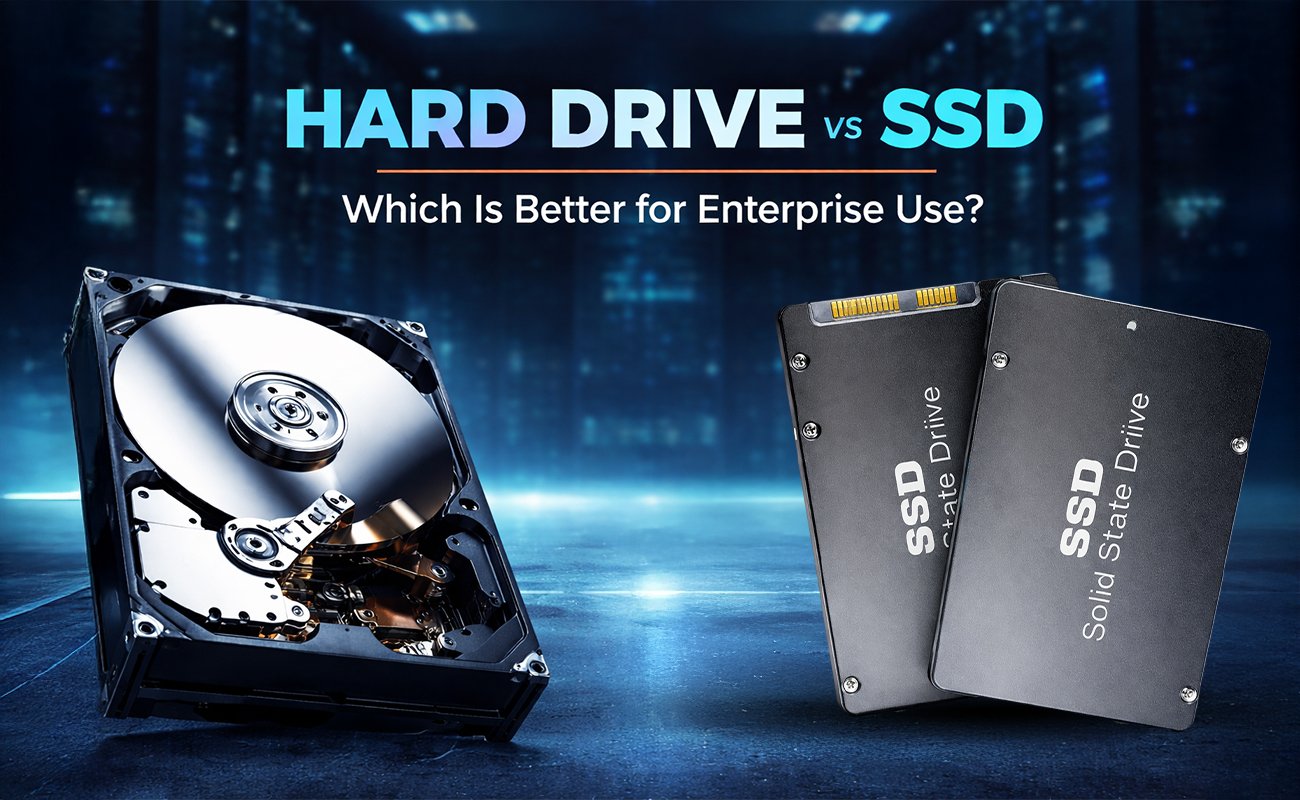
This comprehensive 3000-word guide examines Hard drive vs SSD for enterprise use, breaking down the technology, use cases, benefits, drawbacks, and strategies to help your business make the most informed choice.
1. Understanding the Core Differences Between Hard drive and SSDs
Before diving into the enterprise-specific considerations, it’s essential to understand the architectural differences between the two technologies.

1.1 What Are Hard Disk Drives (HDDs)?
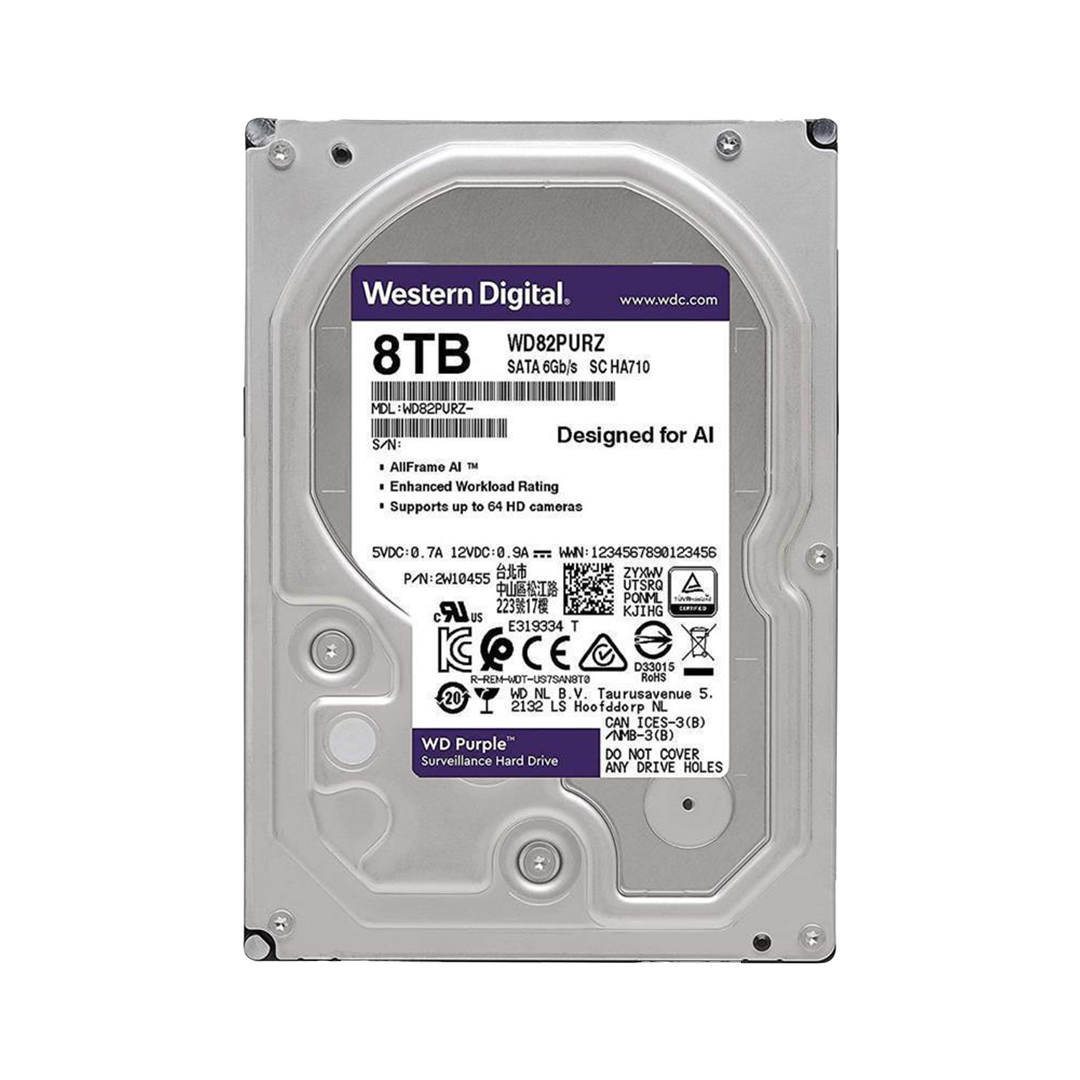
Hard Disk Drives have been the foundation of enterprise storage for decades. They are mechanical devices consisting of spinning magnetic platters, read/write heads, motors, and other moving parts. Data is written magnetically, which allows HDDs to store large amounts of data at relatively low cost.
Key traits of hard drive include:
-
Mechanical operation
-
Higher latency
-
Lower cost per terabyte
-
Millions of operational hours in ideal conditions
-
Performance thresholds limited by RPM (e.g., 7200, 10000, 15000 RPM)
1.2 What Are Solid State Drives (SSDs)?
SSDs represent a leap forward in storage technology. Instead of mechanical movement, SSDs rely on NAND flash memory or NVMe technology to store data electronically. With no moving parts, SSDs offer extremely fast performance, durability, and resistance to mechanical shock.
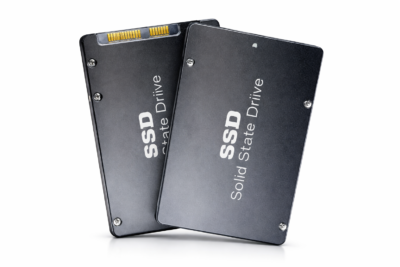
Key traits of SSDs include:
-
No mechanical components
-
Extremely fast data access speeds
-
Lower power consumption
-
Reduced heat generation
-
Higher durability and fewer points of failure
1.3 Enterprise Flash Storage Types
Enterprises typically deploy one of the following SSD forms:
-
SATA SSD: More affordable, slower than NVMe
-
SAS SSD: Balanced speed and reliability
-
NVMe SSD: Fastest commercially available interface
-
PCIe SSD: Ultra-high-performance storage ideal for demanding workloads
Key Enterprise SSD brands:
-
Samsung PM1735 / PM1737 — PCIe Gen4 NVMe SSDs
-
Intel SSD D7 Series — high endurance data center drives
-
Micron 9300 Series — optimized for mixed workloads
-
Crucial MX500 / P5 — enterprise‑ready consumer SSDs for edge use
-
Kingston DC Series — data center optimized
-
SanDisk Extreme Pro (by Western Digital)
2. Enterprise Requirements: What Really Matters?
Enterprises do not evaluate HDDs and SSDs the same way consumers do. Businesses have far more demanding requirements.
Below are the most common enterprise considerations:
2.1 Performance
High read/write speeds, low latency, and high IOPS are essential for:

-
High-traffic web applications
-
Virtualized environments
-
Cloud servers
-
Databases (SQL, Oracle, MongoDB, etc.)
-
Large analytics workloads
SSDs, especially NVMe drives, provide massive performance improvements.
2.2 Reliability
Enterprise storage needs to run 24/7. Mechanical drives are more prone to wear, whereas SSDs offer better reliability and lower failure rates.
2.3 Scalability
Enterprises need infrastructure that can grow with the business. Both HDDs and SSDs scale differently—in cost, capacity, and deployment methods.
2.4 Total Cost of Ownership (TCO)
Upfront cost is one factor; long-term cost is another. Energy efficiency, cooling, maintenance, and system downtime also influence TCO.
2.5 Data Security
Modern SSDs support advanced encryption standards and security features that older HDD systems may lack.
3. Performance Comparison: SSD Dominance in Enterprise Workloads
3.1 Speed and Latency
In enterprise environments, latency is a major determinant of performance. SSDs outperform HDDs dramatically.
| Factor | HDD | SSD |
|---|---|---|
| Latency | High | Very Low |
| Sequential Read | 80–160 Mbps | 500 Mbps–7,000+ Mbps |
| IOPS | 80–200 | 10,000–100,000+ |
| Boot Time | Slow | Near-instant |
Enterprise SSDs can improve application performance by 5× to 20× depending on workload.
3.2 Real-World Benefits for Enterprise
-
Faster access to data improves user experience
-
High-volume transactions execute quicker
-
Virtual machines boot and migrate faster
-
Reduced latency improves cloud performance
In virtually all performance categories, SSDs outclass HDDs.
4. Reliability and Durability: SSDs Lead the Way
4.1 Mechanical vs Non-Mechanical Reliability
HDDs fail primarily because of their mechanical nature. Moving parts introduce vulnerabilities:
-
Head crashes
-
Motor failure
-
Bearing issues
-
Vibration damage
SSDs eliminate these mechanical weaknesses.
4.2 Write Endurance
SSDs have a measurable write endurance (TBW – Terabytes Written), but enterprise-class SSDs are designed for extremely heavy daily writes.
4.3 Heat and Environmental Impact
Hard drive generates significantly more heat due to spinning disks. This increases:
-
Cooling requirements
-
Energy consumption
-
Failure likelihood
SSDs run much cooler and require less maintenance.
5. Capacity and Cost: Where HDDs Still Have the Edge
5.1 Cost per Terabyte

Despite SSD prices dropping annually, hard drive remains far cheaper.
Hard Drives are ideal for:
-
Cold storage
-
Backups
-
Archives
-
Surveillance recording
Their cost-effectiveness makes them indispensable in enterprises with large data retention requirements.
5.2 Scaling Storage with HDDs
Enterprises that need petabyte-level storage for non-critical workloads often choose Hard drive-based storage arrays.
6. Enterprise Use Cases for SSDs vs Hard drive
6.1 When SSDs Are the Better Choice
SSDs should be used for workloads where performance is paramount.
Best SSD enterprise use cases:
-
High-speed databases
-
Financial transaction systems
-
Virtualization (VMware, Hyper-V)
-
AI and ML workloads
-
Cloud-native applications
-
DevOps and CI/CD pipelines
-
Real-time analytics
6.2 When Hard drive Is the Better Choice
HDDs shine in low-performance, high-capacity workloads.
Best Hard drive enterprise use cases:
-
Backups and snapshots
-
File archives
-
Media libraries
-
Compliance-mandated retention
-
CCTV system storage
-
Distributed archival systems
7. Hybrid Storage: A Balanced, Often Optimal Approach
Many enterprises deploy hybrid storage systems to balance performance and cost.
7.1 How Hybrid Systems Work
A hybrid architecture uses:
-
SSDs for “hot” data (frequently accessed)
-
HDDs for “cold” data (rarely accessed)
This combination offers:
-
Lower cost
-
High performance
-
Energy efficiency
-
Data-tiering flexibility
7.2 Automated Tiering
Modern enterprises use software-defined storage to automatically migrate data between SSD and Hard drive tiers based on usage patterns.
8. Power Consumption and Environmental Considerations
8.1 Hard drive Power Usage
HDDs consume more power because of:
-
Motor operation
-
Spindle rotation
-
High heat generation requiring cooling
8.2 SSD Power Usage
SSDs use significantly less power, which results in:
-
Lower electricity cost
-
Reduced cooling requirements
-
Lower carbon footprint
For large data centers, these savings are substantial.
9. Security: SSDs Offer More Advanced Protection
Enterprises need robust data security features.
9.1 Built-In Encryption
Most SSDs include hardware-based AES-256 encryption.
9.2 Secure Erase
SSDs can wipe data instantly using cryptographic erase techniques, which is far more secure than traditional HDD wiping.
9.3 Wear-Leveling Security
SSDs use wear leveling to prevent predictable data placement, improving data integrity.
10. Future Outlook: SSDs Are Becoming the Norm
As NAND flash manufacturing scales and newer technologies like QLC and PLC SSDs mature, SSD prices continue to decline. Meanwhile, Hard drive performance improvements have stagnated over the past decade.
10.1 Enterprise Trends
-
Data centers are shifting to NVMe-only architectures
-
AI workloads demand lower latency
-
Cloud services prefer SSD-backed storage
-
Security mandates faster encryption
10.2 Hard drive Lifespan in the Business World
Hard drive will remain relevant for:
-
Long-term archival storage
-
Massive cold data repositories
-
Security footage storage
But they will continue to shrink in performance-oriented environments.
11. Detailed Pros and Cons Comparison
11.1 Hard drive Pros
-
Low cost per TB
-
Higher maximum storage capacities
-
Great for archives
11.2 Hard drive Cons
-
Mechanical failure rates
-
Slower performance
-
Higher power usage
11.3 SSD Pros
-
Extremely fast performance
-
Higher durability and reliability
-
Lower power and cooling requirements
11.4 SSD Cons
-
Higher cost
-
Limited write endurance (rarely an issue with enterprise drives)
12. Which One Should Your Enterprise Choose?
Choose SSDs if:
-
Performance is mission-critical
-
You run databases, VMs, or analytics
-
You want low latency and high reliability
-
You’re building cloud infrastructure
Choose Hard drive if:
-
You need high-capacity storage
-
You store backups or cold data
-
Cost per TB is your primary concern
For most modern enterprises, a hybrid storage model is ideal.
Conclusion: The Final Verdict
When comparing Hard Drives vs SSDs for enterprise use, the right solution depends heavily on your workloads and business needs. SSDs clearly dominate in performance, reliability, energy efficiency, and long-term usability, making them the best choice for modern computing demands. HDDs still have a meaningful place, particularly for large-scale storage and archival purposes where performance is not a priority.
The most forward-thinking enterprises today are embracing SSDs for active workloads while utilizing HDDs for long-term, cost-effective storage—forming a balanced hybrid ecosystem that delivers both speed and cost efficiency.
If you need help comparing performance benchmarks, selecting hardware, or planning a hybrid storage architecture, I can create a customized guide or consulting-style report for your business
For those interested in HDD details, check out our article on 2.5″ vs 3.5″ hard drives to see which size is right for your enterprise.
Shop now
Sold out

Sold out

Sold out
Sold out
Sold out
Related posts

VPN Firewall vs Standard Firewall: 7 Key Differences

Businesses need reliable network security to protect sensitive information, prevent unauthorized access, and maintain secure commu...
Rack Server vs Tower Server: 6 Key Differences Explained

Rack Server vs Tower Server: 6 Key Differences Explained
Choosing between a rack server and a tower server is an important decisi...
SSD vs HDD Storage: 8 Key Differences Every Business Should Know
SSD vs HDD Storage: 8 Key Differences Every Business Should Know
Choosing the right storage technology is essential for businesse...
Router Performance Explained: 7 Factors That Affect Your Internet Speed

Router performance plays a critical role in determining how efficiently a business network handles daily operations. From cloud-ba...

10 Router Security Features That Help Protect Business Networks
Business networks are constantly exposed to security risks, from unauthorized access and malicious traffic to compromised devices ...

Stateful Firewall vs Next-Generation Firewall: 8 Major Differences
Firewalls play a critical role in protecting business networks from unauthorized access, suspicious traffic, and cyber threats. Ho...

7 Firewall NGFW Types Compared for Business Network Security
Choosing the right NGFW firewall is an important part of protecting business networks fro...
11 Server Features Every IT Manager Should Look For
11 Server Features Every IT Manager Should Look For
Choosing the right server is an important decision for any organization. Serv...
Best RAM Options for Performance Workstations
Best RAM Options for Performance Workstations
Modern performance workstations are built for demanding workloads such as 3D render...

Dual-WAN vs Single-WAN Routers: 6 Key Differences Compared
Modern businesses rely heavily on stable Internet connectivity for cloud applications, communication, online platforms, remote acc...
Wi-Fi Router vs Wired Router: 8 Differences Every Business Should Know
Choosing the right networking equipment is an important decision for any business. As organizations become increasingly dependent ...
Storage Buying Guide: 7 Things to Consider Before You Choose
Storage Buying Guide: 7 Things to Consider Before You Choose
Modern businesses generate and manage large amounts of data every da...
