Welcome To SAS Points — Your One-Stop IT Solutions Provider
Welcome To SAS Points — Your One-Stop IT Solutions Provider
In the dynamic landscape of enterprise networking, choosing the right switch manufacturer can greatly impact your infrastructure’s performance, scalability, and reliability. Two of the most prominent names in the industry are Cisco and Juniper. In this article, we compare Cisco vs Juniper switches and explore which one offers better performance for different business scenarios. Whether you are managing a large data-center, a mid-sized enterprise network, or a branch office, understanding the strengths and limitations of each vendor is crucial.
When selecting switching solutions, businesses consider more than just port counts or basic features. The debate between Cisco vs Juniper switches stems from multiple factors:
Network performance & latency: How fast traffic is forwarded, how many simultaneous flows are handled, and whether the switch can keep up with high-density deployments.
Feature set: Advanced services such as VXLAN, SD-Access, open networking, automation, and telemetry matter.
Ecosystem & integration: Cisco and Juniper each bring a different ecosystem of software, management tools, and partner support.
Total cost of ownership (TCO): Licensing, support contracts, upgrades, and future-proofing affect long-term value.
Reliability & support: Business networks cannot afford downtime; vendor support, hardware quality, and lifecycle matter.
Therefore, comparing Cisco vs Juniper switches isn’t just about “who’s faster” — it’s about which vendor aligns better with your company’s operational needs, growth plans, and technical preferences.
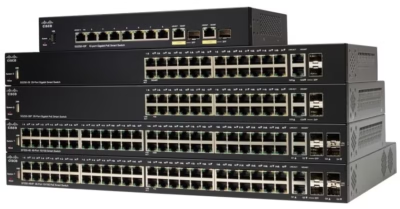
Cisco is a longstanding leader in enterprise networking, with a comprehensive portfolio covering campus, data center, branch, and access layers. Cisco’s switching lines include Catalyst, Nexus, Meraki and more. For high-performance environments, lines like the Catalyst 9000 and Nexus 9000 are very popular.
Broad feature set — spanning Layer 2/3 switching, advanced segmentation (SD-Access), intent-based networking, and telemetry.
Extensive partner ecosystem, training, certifications and global support network.
Rich software stack — Cisco IOS XE, NX-OS, DNA Center, ACI.
Proven reliability in enterprise and carrier networks.
Licensing and support costs can be high.
Some newer innovations may require specific hardware or subscription models.
For smaller deployments, the full enterprise stack may be overkill.
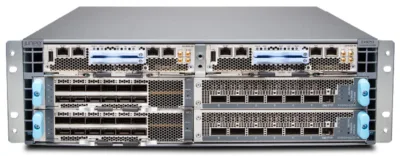
Juniper Networks has built a strong reputation in high-performance routing and is increasingly active in the switching domain. Its QFX and EX series are widely used in data centers and campus networks alike.
Strong performance in data-center switching environments.
Competitive pricing in some segments.
Focus on open standards, automation (via Junos), and high throughput.
Good for large-scale, spine-leaf architectures.
Smaller install base compared to Cisco in some enterprise segments.
Fewer beginner-friendly GUI tools (although Junos Space and other platforms exist).
Some specialized features may lag behind the feature abundance of Cisco in campus environments.
In high-throughput environments, both Cisco and Juniper deliver excellent performance. However, Juniper’s QFX series often demonstrates lower latency in leaf/spine setups, while Cisco’s Nexus 9000 series offers massive scale and integration with Cisco’s ACI for data-center automation. When comparing Cisco vs Juniper switches, look at metrics like micro-burst handling, MAC address table size, and flow concurrency.
Cisco’s Catalyst 9000 line supports very broad “campus to cloud” use cases.
Juniper’s QFX and EX lines are optimized for spine-leaf with very high port densities per chassis.
For ultra-large deployments, Juniper may offer slightly better raw density per dollar, while Cisco offers richer ecosystem integration.
Cisco provides an exceptionally deep feature set for campus networking — SD-Access, advanced telemetry, full intent-based networking.
Juniper shines in environment flexibility and throughput, with strong automation and open-networking capabilities.
So in the Cisco vs Juniper switches discussion, if you need full stack controls and advanced services, Cisco may lead; if you need high-speed switching with modularity and open-standards, Juniper is compelling.
Both vendors provide strong security capabilities, but their approach differs.
Integration with Cisco TrustSec, DNA Center, Secure Boot, and Encrypted Traffic Analytics.
Strong partner ecosystem for threat intelligence and worldwide support.
Focus on open standards, live automation via Junos, and secure operations.
Good option if you prefer a vendor-agnostic or multi-vendor strategy.
When choosing between Cisco vs Juniper switches, your security strategy might tip the balance. If you want “one-vendor full stack” security with global support, Cisco often leads. If you want flexibility and potentially lower cost, Juniper may fit.
Modern networks demand automation and visibility. Here’s how each vendor stacks up:
Cisco: Strong integration with DNA Center, ACI, and Cloud-Native APIs. Ideal for IT teams comfortable with Cisco toolsets.
Juniper: Junos OS is praised for its consistency across devices and strong automation via scripting, open APIs, and SDKs.
In the Cisco vs Juniper switches context, if your team values Cisco’s broad tool ecosystem and support, Cisco may be favourable. If your team is technically agile and prefers open automation frameworks, Juniper offers a strong alternative.
Cost is always a factor. When evaluating Cisco vs Juniper switches for your business:
Cisco often comes with higher upfront cost, licensing fees, and support contracts.
Juniper may offer lower initial CAPEX and more flexible licensing in some cases.
But remember: support, training, compatibility, future-proofing all affect TCO.
It’s important to perform a full cost-benefit analysis tailored to your business size, growth trajectory, and future needs.
Large enterprise campus networks where advanced features (SD-Access, segmentation, telemetry) are required.
Data-centers already standardized on Cisco ACI or Nexus ecosystem.
Organisations needing global support, standardized training, and broad partner availability.
High-performance data-center environments needing extreme port density, high throughput, and lower cost per port.
Companies with in-house networking expertise seeking automation and open-networking flexibility.
Multi-vendor networks where vendor-lock-in is a concern.
Selecting purely on brand name rather than actual feature alignment with business needs.
Over-buying high-end switches for small offices where simpler models suffice.
Ignoring future scalability, licensing renewal cost, or integration with existing systems.
Not piloting actual performance under expected load before roll-out.
| Feature | Cisco Switches | Juniper Switches |
|---|---|---|
| Brand Ecosystem | Extensive partner/training/support | Strong, but smaller scale |
| Feature Depth | Very deep for campus and enterprise | Strong for data-center/high throughput |
| Automation | Excellent, but often tied to Cisco stack | Excellent, open standards, flexible |
| Cost | Higher up-front + licensing costs | Lower entry cost, flexible licensing |
| Ideal Use Case | Campus, enterprise, broad ecosystem | Data-center, high port-density, flexible |
| Vendor Lock-in Risk | Higher (due to broad stack) | Lower (more open standards) |
How many users/devices will the switch support today and in 3-5 years?
Are you running a campus, data-center, or branch-office environment?
What level of automation and control do you need?
What is your in-house IT skill level?
What is your budget for upfront cost and licensing/support?
Are you relying on a single vendor or planning multi-vendor integration?
In the Cisco vs Juniper switches discussion, the answer depends on your specific business scenario rather than a universal “winner.” If your organization prioritises broad feature sets, global support, and a unified vendor environment, Cisco is a safe and powerful choice. If your focus is high-performance switching, port density, open automation, and potentially lower cost, Juniper makes a compelling case.
Ultimately, the key is to match your network needs, growth plans, skill sets, and budget with the strengths of each vendor. The “best performance” is the performance that aligns with your business context.
For more models, options and detailed specifications, explore our full category of Cisco and Juniper switches here and find the perfect solution for your network upgrade.
No account yet?
Create an Account