Dell Tower Servers vs HPE Tower: Best Picks for Office Use
Choosing the Right Tower Server for Your Office
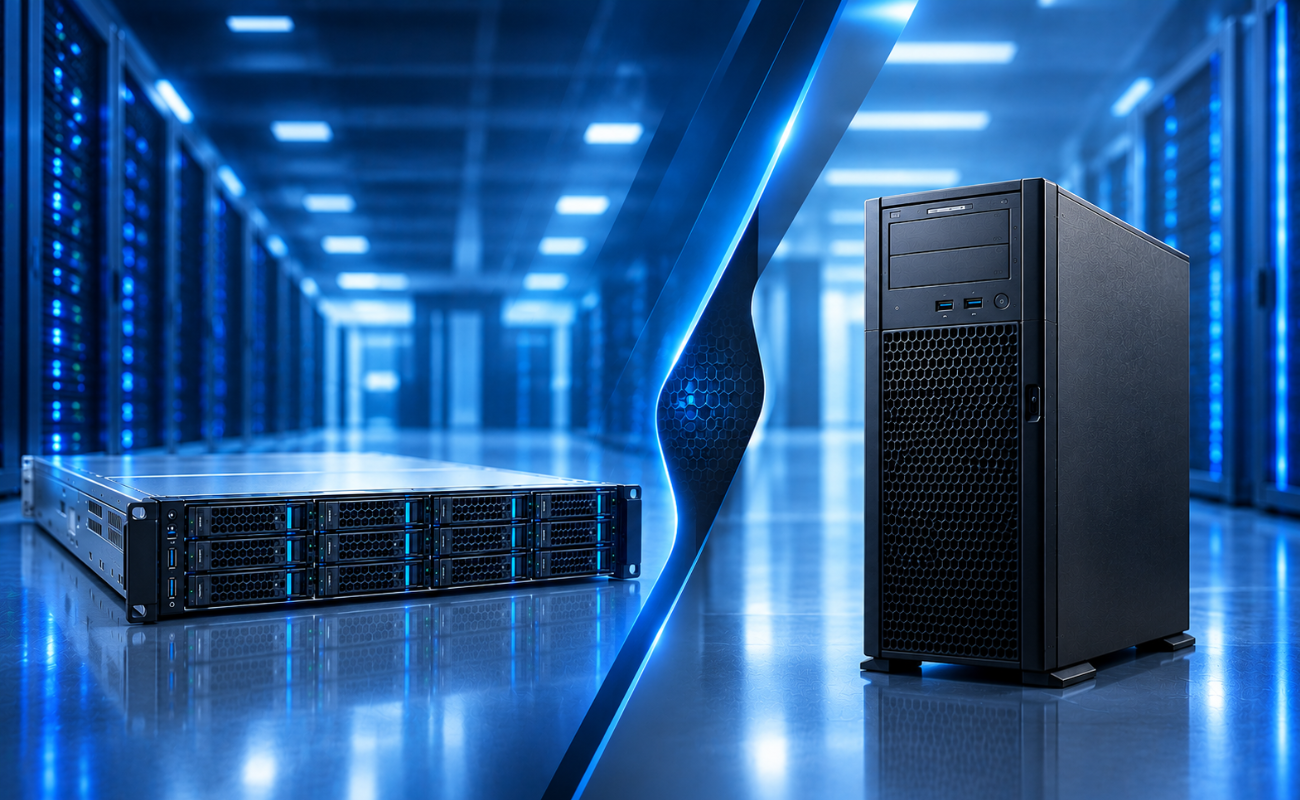
Small and medium businesses need computing systems that are reliable, scalable, energy-efficient, and easy to manage. When evaluating options for office environments, understanding Dell Tower Servers vs HPE Tower: Best Picks for Office Use is essential to making a smart investment.
This comparison explores the key features, performance differences, and business benefits of tower server options from Dell and Hewlett Packard Enterprise (HPE), enabling IT decision-makers to select the best solution for their office infrastructure.
Why Tower Servers Still Matter for Office Use
Tower servers remain popular for office deployments because they offer:
-
Standalone form factor suitable for small server rooms
-
Quiet operation and minimal cooling needs
-
Easy maintenance and upgrades
-
Cost-effective total cost of ownership (TCO)
When looking at Dell Tower Servers vs HPE Tower: Best Picks for Office Use, it becomes clear that both vendors provide strong solutions—but each with unique strengths.
Dell Tower Servers: Office-Ready Performance and Reliability
Dell’s tower server portfolio includes models designed to balance performance, affordability, and enterprise-grade reliability. Known for strong hardware engineering and broad ecosystem support, Dell tower servers are ideal for business-critical workloads.
Key advantages of Dell tower servers:
-
Reliable performance for file sharing, print services, and databases
-
Rich configuration options for CPUs, RAM, and storage
-
Powerful remote management tools via iDRAC and OpenManage
-
Compatibility with a wide range of office applications
These characteristics make Dell solutions central in discussions of Dell Tower Servers vs HPE Tower: Best Picks for Office Use.
HPE Tower Servers: Scalable, Secure, and Enterprise-Focused
HPE’s tower server lineup focuses on management simplicity, integrated security, and future scalability. HPE ProLiant tower servers are well-regarded for their durability and extensive support ecosystem.
Key advantages of HPE Tower servers:
-
Integrated iLO management for remote monitoring and updates
-
Security features like silicon root of trust
-
Scalable configurations that support data growth
-
Strong compatibility with virtualization and backup systems
These capabilities strongly position HPE in the comparison of Dell Tower Servers vs HPE Tower: Best Picks for Office Use.
Performance and Workload Handling Comparison
When evaluating Dell Tower Servers vs HPE Tower: Best Picks for Office Use for performance, consider your expected workloads:
Dell Tower Servers
-
Excellent balance of CPU performance and expandability
-
Suitable for medium workloads such as ERP, CRM, and file servers
-
Strong virtualization support at small to medium scales
HPE Tower Servers
-
Comparable processing power with enterprise-grade tuning
-
Better scalability for future growth in memory and storage
-
Optimized for hybrid environments and remote management
Both deliver robust performance, but the choice often depends on long-term plans and specific office workloads.
Management and Remote Administration
Effective server management simplifies IT operations. In evaluating Dell Tower Servers vs HPE Tower: Best Picks for Office Use, management tools are a key differentiator.
Dell Server Management
-
iDRAC (integrated Dell Remote Access Controller) provides detailed system health
-
OpenManage ecosystem integrates with enterprise monitoring tools
-
Remote firmware updates and diagnostics
HPE Server Management
-
iLO (Integrated Lights-Out) offers secure remote access and server health metrics
-
OneView provides unified infrastructure management
-
Intelligent provisioning streamlines deployment
Both tools support proactive maintenance, but many IT teams find HPE’s iLO interface easier for remote administration.
Security and Data Protection
Security is crucial for office servers. In the comparison Dell Tower Servers vs HPE Tower: Best Picks for Office Use, consider:
-
Integrated hardware security features
-
Support for secure firmware and boot processes
-
Role-based access control
-
Encryption support
HPE often leads with hardware-rooted security features, while Dell delivers strong industry-standard protections within its systems.
Energy Efficiency and Operational Costs
Tower servers designed for office use must be energy efficient to minimize electricity and cooling costs. Both Dell and HPE deliver systems optimized for low power draw, but specifics vary:
Dell Tower Servers
HPE Tower Servers
-
Power-optimized configurations
-
Management capabilities that scale power use based on load
-
Better suited for organizations with power efficiency targets
In evaluating Dell Tower Servers vs HPE Tower: Best Picks for Office Use, HPE may offer longer-term savings on energy costs, depending on configuration.
Scalability and Future Proofing
Office IT environments often grow over time. Scalability includes:
-
Support for increased RAM and storage
-
Additional PCIe expansion slots
-
Easy upgrades to CPUs and network cards
Both Dell and HPE towers support future upgrades, but HPE often has a slight advantage in maximum expansion capacity in select models.
Total Cost of Ownership (TCO)
When comparing Dell Tower Servers vs HPE Tower: Best Picks for Office Use, it’s crucial to evaluate TCO:
-
Upfront hardware cost
-
Licensing and support agreements
-
Power and cooling expenses
-
Maintenance and administration time
Dell may offer lower initial purchase prices, while HPE often delivers long-term support and integrated management that reduces administrative overhead.
Real-World Use Case Scenarios
To help illustrate the comparison Dell Tower Servers vs HPE Tower: Best Picks for Office Use:
Small Office Deployment
-
Dell tower models provide strong performance for basic file, domain, and print services
-
Limited expansion is acceptable
Growing SMB with Remote Teams
Both vendors can serve a range of office environments, but matching features to use case ensures optimized investment.
Conclusion: Choosing the Best Tower Server for Your Office
When evaluating Dell Tower Servers vs HPE Tower: Best Picks for Office Use, both provide excellent solutions with distinct advantages:
-
Dell Tower Servers excel in balanced performance and ease of deployment
-
HPE Tower Servers lead in management tools, scalability, and integrated security
The best choice depends on your specific office needs, growth plans, and IT management capabilities. Regardless of brand, selecting a tower server that offers reliability, performance, and future-proofing will empower your organization with a strong infrastructure foundation.