
















































Modern businesses rely heavily on stable Internet connectivity for cloud applications, communication, online platforms, remote access, data transfers, and daily operations. When the Internet connection becomes unavailable, even a short outage can interrupt important business activities.
This makes router selection an important part of business network planning. One of the key decisions organizations may face is whether to use a single-WAN router or a router with Dual-WAN capabilities.
Understanding the differences between Dual-WAN vs Single-WAN Routers can help businesses evaluate their connectivity requirements and determine which type of network architecture is more suitable for their environment.
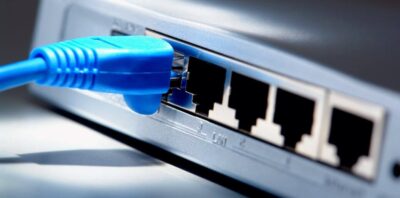
A single-WAN router typically uses one primary Internet connection, while a Dual-WAN router can connect to two separate WAN connections. Depending on the router and configuration, the second connection may be used for failover, traffic distribution, or other connectivity strategies.
In this guide, we will compare Dual-WAN vs Single-WAN Routers through six key differences, including redundancy, reliability, bandwidth management, traffic distribution, scalability, and business use cases.
Explore professional networking hardware from SAS Points to build a business network around your connectivity and performance requirements.
What Is a Single-WAN Router?
A single-WAN router is designed to connect a business network to one primary Wide Area Network (WAN) or Internet connection.
The router manages traffic between the internal network and the external network through that single WAN interface.
For many small offices and organizations with straightforward Internet requirements, a single-WAN configuration can provide the connectivity needed for everyday operations.
A typical setup may include:
- One Internet connection
- One WAN interface
- Internal LAN connections
- Network switches
- Wireless access points
- Business computers and devices
The simplicity of this configuration can make it easier to deploy and manage.
However, the organization becomes dependent on its primary Internet connection. If that connection experiences an outage, Internet-based services may become unavailable unless another connectivity method is available.
If your organization needs a straightforward networking setup, SAS Points can help you explore suitable router and network hardware for your infrastructure.
What Is a Dual-WAN Router?
A Dual-WAN router supports two WAN connections, allowing a business to connect to two separate Internet services or WAN links.
The two connections can be configured in different ways depending on the router’s capabilities and the organization’s requirements.
Common configurations include:
- Primary and backup Internet connections
- WAN failover
- Load balancing
- Traffic distribution
- Different policies for different connections
For example, a business could use one Internet connection as its primary link and a second connection as a backup.
If the primary connection fails, the router can switch traffic to the secondary connection when failover is configured and supported.
Some Dual-WAN solutions can also distribute traffic across both connections, potentially making better use of available bandwidth.
Build greater connectivity flexibility into your network with Dual-WAN and professional networking solutions from SAS Points.
Dual-WAN vs Single-WAN Routers: 6 Key Differences
The differences between these two router configurations become clearer when looking at how they handle connectivity, redundancy, bandwidth, traffic, scalability, and business continuity.
1. Internet Connection Redundancy
One of the most important differences in Dual-WAN vs Single-WAN Routers is redundancy.
A single-WAN router normally depends on one WAN connection. If that connection fails, the router has no second WAN link to automatically use unless another external solution is available.
A Dual-WAN router can provide a second WAN connection that may act as a backup.
Single-WAN Redundancy
With a single-WAN setup, the business generally has one primary path to the Internet.
Possible causes of disruption include:
- ISP outages
- Physical cable problems
- Network maintenance
- Equipment failures
- Connectivity issues
If the WAN connection becomes unavailable, Internet-dependent services may be interrupted.
This can affect cloud applications, email, remote access, online communication, and other business processes.
Dual-WAN Redundancy
A Dual-WAN configuration can introduce a second WAN connection.
For example:
WAN 1 → Primary Internet Connection
WAN 2 → Backup Internet Connection
If the primary WAN connection fails, the router can be configured to move traffic to the secondary connection.
This configuration is commonly known as WAN failover.
The exact behavior depends on the router, WAN services, configuration, and health-check mechanisms being used.
Reduce dependence on a single Internet connection with networking hardware designed to support greater connectivity redundancy.
2. Failover and Business Continuity
Failover is closely related to redundancy, but it focuses specifically on how the network responds when the primary connection becomes unavailable.
This is another major consideration when comparing Dual-WAN vs Single-WAN Routers.
Single-WAN Failover
A traditional single-WAN router does not normally provide built-in WAN failover because it has only one WAN connection.
If the primary Internet service goes down, the business may need to manually switch to another connection or use an additional networking device.
This can increase recovery time and require intervention from an IT administrator.
Dual-WAN Failover
Dual-WAN routers can be configured to monitor the primary WAN connection and use the secondary WAN connection when a failure is detected.
For example:
- WAN 1 provides the primary connection.
- The router monitors WAN 1.
- WAN 1 becomes unavailable.
- The router switches traffic toward WAN 2.
- Internet connectivity continues through the secondary connection.
This can be useful for businesses where continuous Internet access is important.
However, failover does not necessarily mean that every active session will continue without interruption. Some applications may need to reconnect after the WAN path changes.
Support business continuity with a networking setup that provides an alternative connection path when the primary WAN link becomes unavailable.
3. Bandwidth and Traffic Distribution
Another important difference in Dual-WAN vs Single-WAN Routers is the ability to manage multiple Internet connections.
A single-WAN router has one WAN connection available for normal traffic.
A Dual-WAN router can potentially use two connections, depending on its supported features and configuration.
Single-WAN Bandwidth
With a single-WAN configuration, all Internet traffic passes through one connection.
If the business has a 500 Mbps Internet connection, the available external bandwidth is generally limited by that connection and the capabilities of the network equipment.
When many employees use bandwidth-intensive applications simultaneously, the connection can become congested.
Dual-WAN Bandwidth
A Dual-WAN router can connect two Internet services.
For example:
WAN 1 → 500 Mbps
WAN 2 → 300 Mbps
Depending on the router’s load-balancing capabilities, traffic can be distributed across the two WAN connections.
This does not necessarily mean that one individual device will receive the combined 800 Mbps as a single connection. Instead, the router may distribute different traffic flows across the available WAN links.
This distinction is important when evaluating Dual-WAN performance.
Make better use of available Internet connections with networking solutions designed for efficient traffic and bandwidth management.
4. Load Balancing and Traffic Management
Load balancing is another feature that can distinguish Dual-WAN routers from basic single-WAN configurations.
When two WAN connections are available, supported routers may use traffic-management policies to distribute network traffic between them.
How Dual-WAN Load Balancing Works
The router can determine how traffic should be distributed based on its configuration.
Depending on the solution, policies may consider:
- Connection availability
- Traffic volume
- Application requirements
- Destination
- Source
- Bandwidth
- Network policies
For example, an organization could use one WAN connection primarily for general Internet traffic while directing selected traffic through another connection.
The exact options depend on the router’s software and hardware capabilities.
Why Traffic Management Matters
Businesses increasingly depend on multiple applications at the same time.
Employees may simultaneously use:
- Cloud platforms
- Video conferencing
- VoIP
- File-sharing applications
- Web applications
- Remote access
- Online business systems
Managing traffic across multiple WAN connections can help organizations make more efficient use of available connectivity.
Improve control over business Internet traffic with professional networking hardware and connectivity solutions from SAS Points.
5. Scalability and Network Flexibility
Scalability is another important factor when evaluating Dual-WAN vs Single-WAN Routers.
Business requirements can change over time. An organization may increase its number of employees, add cloud applications, open another branch, or upgrade its Internet services.
Single-WAN Scalability
A single-WAN configuration can remain suitable when the organization has straightforward connectivity requirements.
However, adding a second Internet provider later may require a router upgrade if the existing hardware does not support multiple WAN connections.
This can create additional costs associated with:
- Router replacement
- Configuration
- Installation
- Network changes
- IT administration
Dual-WAN Scalability
A Dual-WAN router provides two WAN interfaces from the beginning.
This gives the organization more flexibility when adding or maintaining multiple Internet services.
For example, a business can initially use:
WAN 1 → Primary ISP
WAN 2 → Secondary ISP
The second connection can be used as a backup or for traffic distribution based on the organization’s requirements.
This can make the network architecture more adaptable as connectivity needs change.
Plan for future connectivity requirements with scalable networking hardware that gives your business more flexibility.
6. Business Use Cases and Network Requirements
The final major difference in Dual-WAN vs Single-WAN Routers is where each configuration may be appropriate.
The correct choice depends on the organization’s size, applications, Internet dependency, budget, and continuity requirements.
Single-WAN Use Cases
A single-WAN router may be suitable for:
- Small offices
- Limited numbers of users
- Basic Internet usage
- Simple network environments
- Businesses with reliable primary Internet service
- Organizations without strict redundancy requirements
For these environments, maintaining a simple network architecture can be practical.
Dual-WAN Use Cases
Dual-WAN routers may be useful for businesses that require:
- Internet redundancy
- WAN failover
- Multiple Internet providers
- Load balancing
- Greater bandwidth flexibility
- Business continuity
- More advanced traffic management
Organizations that rely heavily on cloud applications, remote access, online platforms, and continuous Internet connectivity may have stronger reasons to consider a multi-WAN architecture.
Evaluate your organization’s connectivity requirements and explore networking hardware from SAS Points designed for professional business environments.
Dual-WAN vs Single-WAN Routers: Which Configuration Should You Consider?
There is no single configuration that is suitable for every business.
The decision should be based on how important Internet connectivity is to daily operations and how much flexibility the network requires.
When Single-WAN May Be Suitable
A single-WAN router may be enough when:
- The business has a small number of users.
- Internet usage is relatively simple.
- There is no strong requirement for automatic WAN failover.
- The primary Internet connection is considered sufficient.
- The network architecture needs to remain simple.
For smaller environments, adding additional WAN infrastructure may provide capabilities that the organization does not currently need.
If your business has straightforward connectivity requirements, SAS Points can help you identify networking hardware that matches your current infrastructure.
When Dual-WAN May Be More Appropriate
A Dual-WAN router may be worth considering when:
- Internet downtime can significantly affect operations.
- The organization has two available Internet connections.
- Business applications depend heavily on Internet access.
- Remote employees require continuous connectivity.
- The company needs WAN failover.
- Traffic needs to be distributed between multiple connections.
- The organization expects its connectivity requirements to grow.
The key consideration is not simply the number of WAN ports but how those WAN connections will be used within the overall network architecture.
Build a more flexible connectivity strategy with Dual-WAN networking hardware and professional solutions from SAS Points.
How to Choose the Right Dual-WAN Router
If a Dual-WAN architecture matches your business requirements, there are several factors to evaluate before purchasing the router.
Check WAN Port Capabilities
Start by checking the number and type of WAN interfaces available.
Not every router with multiple Ethernet ports necessarily provides the same WAN functionality.
Check whether the router supports the connection types and speeds required by your Internet services.
Evaluate Throughput
Router throughput is another important consideration.
A Dual-WAN router should be able to handle the expected amount of traffic without becoming a performance bottleneck.
Consider:
- Internet speed
- Number of users
- Concurrent connections
- Application workload
- VPN traffic
- Security processing
Check Failover Features
If business continuity is one of the main reasons for choosing Dual-WAN, evaluate the router’s failover functionality.
Look at how the router detects WAN failures and how traffic is moved to the secondary connection.
You should also consider how applications behave when the WAN path changes.
Review Load-Balancing Options
If the organization wants to use both Internet connections actively, investigate the available load-balancing features.
Different routers may use different methods to distribute traffic.
Understanding these options can help your IT team design the WAN architecture more effectively.
Consider Future Requirements
Think beyond your current Internet connection.
Your organization may increase its bandwidth requirements as it adds employees, cloud applications, remote users, or additional locations.
Selecting hardware with appropriate capacity can help reduce the need for an immediate upgrade.
Prepare your network for future growth with scalable networking hardware from SAS Points.
Common Mistakes When Using Dual-WAN Routers
Dual-WAN technology can provide useful capabilities, but simply installing a router with two WAN ports does not automatically create a reliable multi-WAN network.
Several factors should be considered during deployment.
Assuming Two Connections Always Double Speed
One common misconception is that two Internet connections automatically provide double the speed for every device.
In many configurations, the router distributes separate traffic flows across the available WAN connections rather than combining both connections into one single connection for every user.
The actual behavior depends on the router and its configuration.
Using the Same ISP for Both Connections
If both WAN connections depend on the same underlying infrastructure, an outage affecting that provider or infrastructure may potentially affect both connections.
For stronger redundancy, businesses may evaluate whether separate providers or diverse connectivity paths are available.
Ignoring Failover Configuration
A second WAN connection is only useful as a backup if the router is properly configured to detect failures and redirect traffic.
IT teams should test failover behavior rather than assuming it will work automatically.
Selecting Hardware Without Considering Throughput
A router may support two WAN connections but still have limitations in processing capacity.
The hardware should be evaluated based on expected traffic, security features, VPN usage, concurrent connections, and other workloads.
Avoid common multi-WAN deployment issues by choosing networking hardware based on actual business requirements and infrastructure capacity.
Why WAN Redundancy Matters for Modern Businesses
Internet connectivity has become an important part of daily business operations.
Employees may depend on cloud platforms for documents, communication, customer management, accounting, collaboration, and other workflows.
Businesses may also rely on remote access, online meetings, VoIP, e-commerce platforms, and cloud-based infrastructure.
As dependence on Internet connectivity increases, network downtime can have a greater operational impact.
A Dual-WAN architecture can provide an additional connectivity path that may help reduce the impact of a primary WAN failure.
However, redundancy should be considered as part of the broader network design rather than as a replacement for proper network planning.
Strengthen your business connectivity strategy with reliable networking hardware and infrastructure solutions from SAS Points.
Dual-WAN vs Single-WAN Routers: Cost Considerations
Cost is another factor businesses should evaluate.
A single-WAN solution typically requires fewer connectivity resources and may have a simpler deployment.
A Dual-WAN architecture can introduce additional costs because the organization may need:
- A Dual-WAN router
- Two Internet services
- Additional configuration
- Network monitoring
- IT management
However, the value of the second connection depends on how important continuous Internet access is to the organization.
For a business where an Internet outage can disrupt critical operations, the additional connectivity may provide useful redundancy.
For a small business with minimal Internet dependency, a single-WAN solution may be sufficient.
The decision should therefore consider both the initial cost and the potential operational impact of downtime.
Evaluate networking costs based on your business requirements and long-term connectivity needs with SAS Points.
Why Choose SAS Points for Business Networking Hardware?
Choosing the right router requires more than comparing the number of ports or advertised speeds.
Businesses should consider how the router will operate within the complete network infrastructure.
At SAS Points, organizations can explore professional IT hardware and networking equipment based on their connectivity, performance, scalability, and infrastructure requirements.
When evaluating a router, businesses should consider:
- Number of users
- Internet bandwidth
- WAN requirements
- Failover needs
- Traffic management
- Security requirements
- VPN usage
- Network scalability
- Future growth
Whether your organization needs a straightforward single-WAN configuration or a more flexible multi-WAN architecture, selecting the right networking hardware can help create a stronger foundation for business connectivity.
Planning a network upgrade? Contact SAS Points to explore networking hardware that matches your organization’s connectivity requirements.
Frequently Asked Questions
What Is the Difference Between Dual-WAN vs Single-WAN Routers?
A single-WAN router normally uses one WAN connection, while a Dual-WAN router supports two WAN connections. Dual-WAN configurations can provide capabilities such as failover and load balancing, depending on the router.
Does Dual-WAN Double Internet Speed?
Not necessarily. Dual-WAN routers can distribute different traffic flows across multiple connections, but they do not automatically combine both connections into one single connection for every device.
What Is WAN Failover?
WAN failover is a configuration in which a secondary WAN connection is used when the primary WAN connection becomes unavailable.
Is Dual-WAN Better for Business?
Dual-WAN provides additional capabilities such as WAN redundancy and traffic distribution, but whether those capabilities are required depends on the organization’s network requirements.
Can I Use Two Different Internet Providers With Dual-WAN?
Many Dual-WAN routers can support two separate Internet connections, including connections from different providers, depending on the router and service configuration.
Does Dual-WAN Improve Network Reliability?
A properly configured Dual-WAN setup can improve connectivity resilience by providing a secondary WAN connection that can be used if the primary connection fails.
Is Dual-WAN More Expensive Than Single-WAN?
A Dual-WAN setup can cost more because it may require additional router capabilities and a second Internet service. The value depends on the organization’s need for redundancy, traffic distribution, and business continuity.
Should a Small Business Use Dual-WAN?
A small business may consider Dual-WAN when Internet connectivity is critical, downtime has a significant operational impact, or multiple Internet connections are available. For simpler environments, a single-WAN router may provide sufficient connectivity.
Conclusion
Understanding Dual-WAN vs Single-WAN Routers is important when designing a reliable business network.
Single-WAN routers provide a straightforward approach based on one primary WAN connection and can be suitable for organizations with simple connectivity requirements.
Dual-WAN routers provide two WAN connections and can support additional capabilities such as failover, redundancy, traffic distribution, and load balancing, depending on the hardware and configuration.
The six key differences covered in this guide—connection redundancy, failover, bandwidth management, traffic distribution, scalability, and business use cases—highlight the different ways these two router configurations can support business networks.
The right choice depends on how heavily the organization relies on Internet connectivity, the number of users and applications, available Internet services, business continuity requirements, and future growth plans.
Businesses should also remember that two WAN connections do not automatically mean double Internet speed, and simply purchasing a Dual-WAN router does not guarantee seamless failover. Proper configuration, testing, monitoring, and network planning remain essential.
By evaluating these factors before purchasing networking hardware, organizations can choose a WAN architecture that aligns with their operational requirements and long-term connectivity strategy.
Choosing between Single-WAN and Dual-WAN configurations is only one part of building the right business network. To understand how connectivity options affect performance and reliability, read our guide to Wi-Fi Router vs Wired Router: 8 Differences Every Business Should Know.
Shop now
Sold out

Sold out
Sold out


Sold out
Sold out
Related posts
Dual-WAN vs Single-WAN Routers: 6 Key Differences Compared

Modern businesses rely heavily on stable Internet connectivity for cloud applications, communication, online platforms, remote acc...
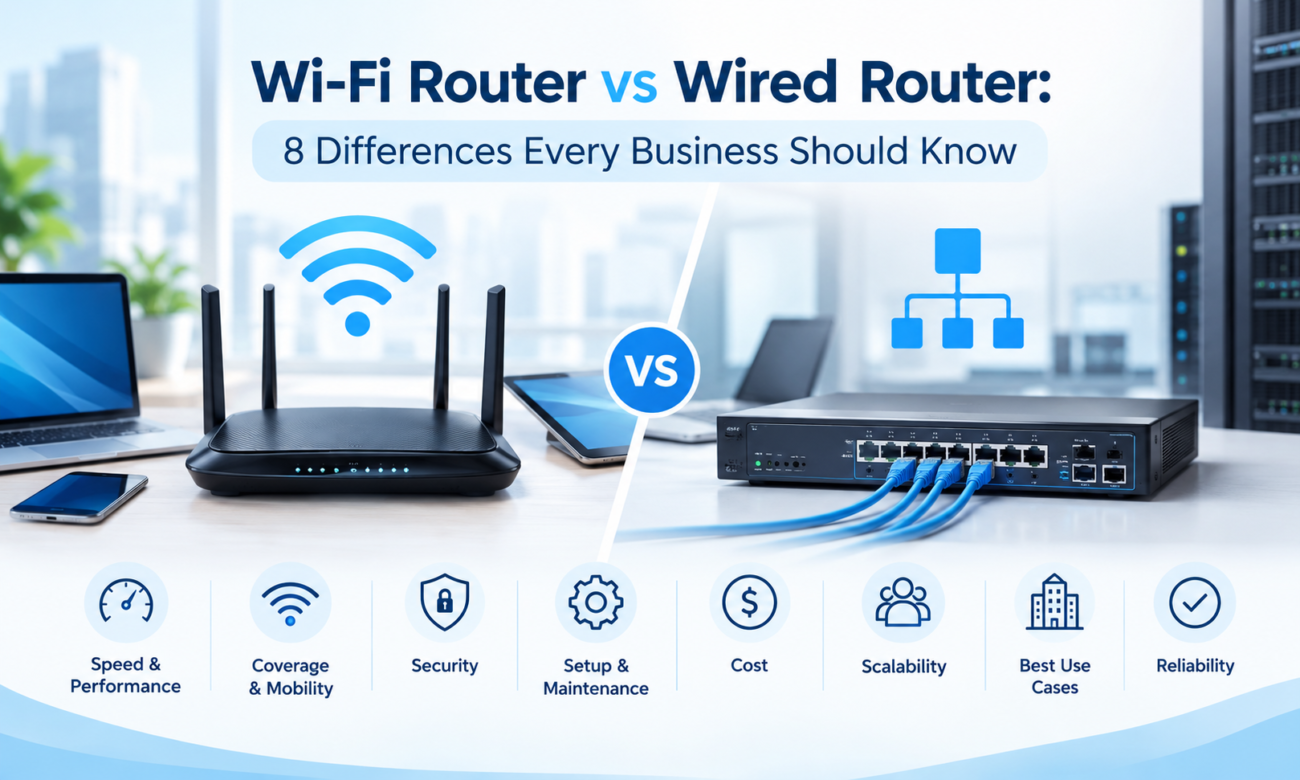
Wi-Fi Router vs Wired Router: 8 Differences Every Business Should Know
Choosing the right networking equipment is an important decision for any business. As organizations become increasingly dependent ...

Storage Buying Guide: 7 Things to Consider Before You Choose

Storage Buying Guide: 7 Things to Consider Before You Choose
Modern businesses generate and manage large amounts of data every da...
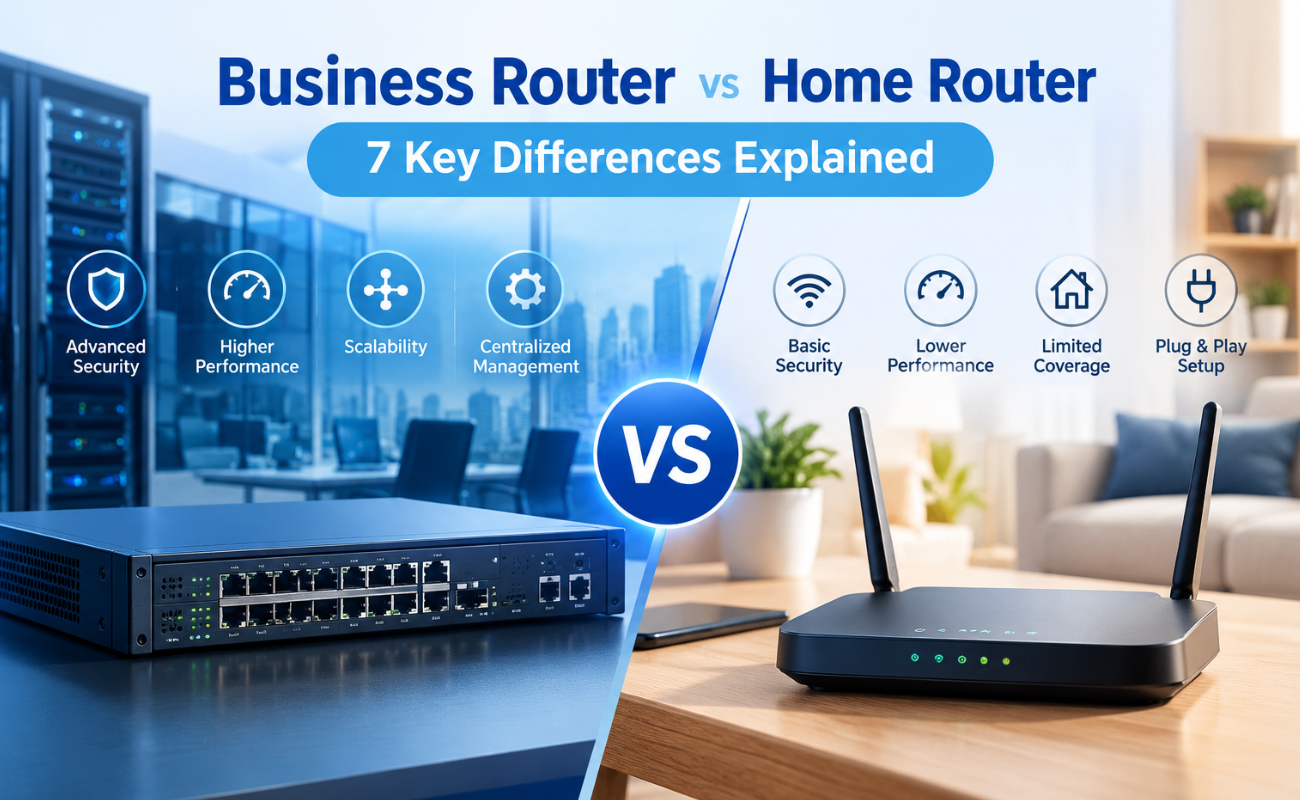
Business Router vs Home Router: 7 Key Differences Explained
Introduction
Choosing the right router can have a major impact on how efficiently a network performs. While home routers are desi...
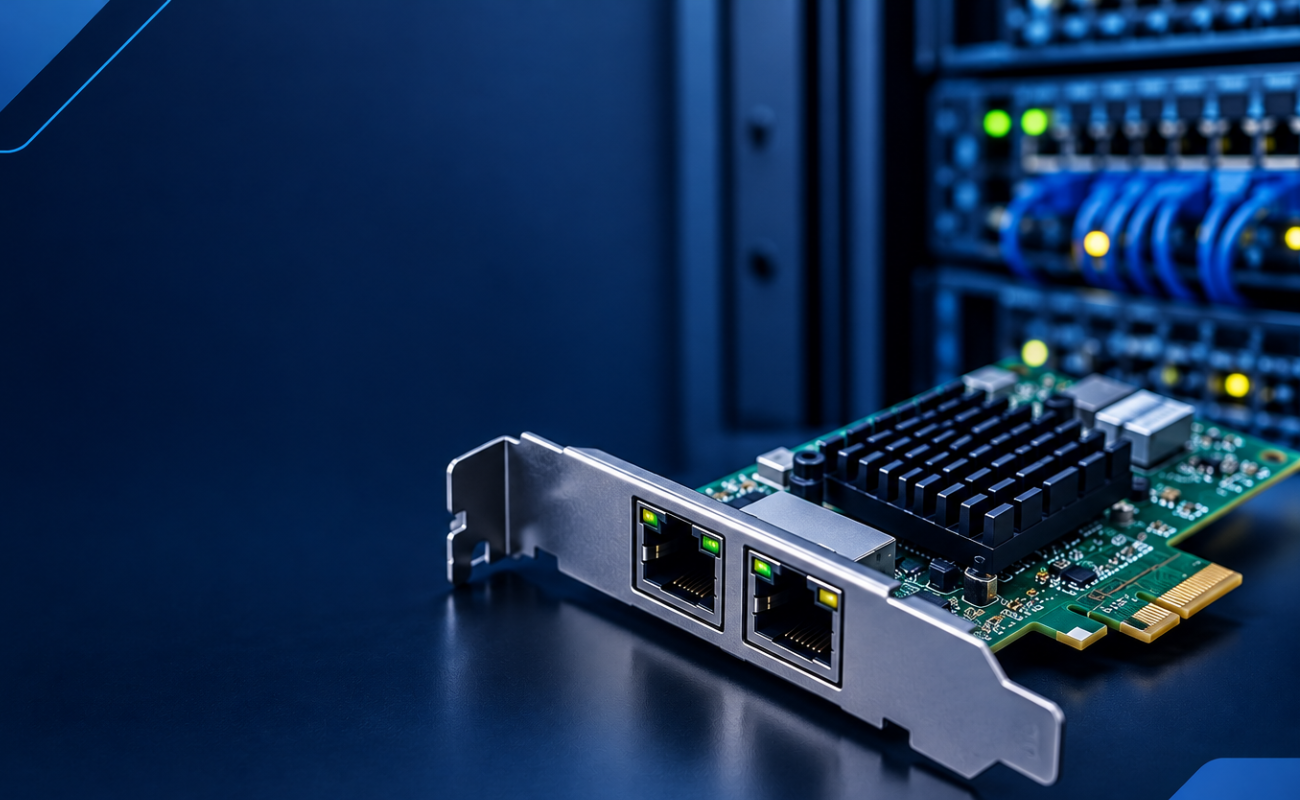
What Is a Network Card and When to Upgrade It?
What Is a Network Card and When to Upgrade It?
In modern business networks, fast and reliable communication between computers, se...

How VLANs Work on Managed Switches: 7 Key Benefits for Business Networks
Introduction
As business networks continue to grow, connecting more devices to the same physical infrastructure can create signif...

How to Choose the Right Firewall for Your Business in 7 Steps

Introduction
Cybersecurity has become a major priority for businesses of every size. From small offices to large enterprises, org...

Hardware Firewall vs Cloud Firewall: 7 Key Differences for Businesses
Choosing the right firewall is an important decision for businesses that want to protect ...

Next-Generation Firewall vs Traditional Firewall: 9 Comparison Points
Network security has changed dramatically as businesses rely ...
Hardware Firewall vs Software Firewall: 7 Differences Explained
A firewall is one of the most important security tools for protecting business networks, devices, and sensitive data. It monitors ...

HPE Z Series Workstations: Designed for Professionals
HPE Z Series Workstations: Designed for Professionals
Professionals working with demanding applications need more than a standard...

10 Signs It’s Time to Upgrade Your Network Switch
A reliable network is essential for businesses that depend on computers, servers, cloud applications, wireless access points, IP c...
