




























Welcome To SAS Points — Your One-Stop IT Solutions Provider

In today’s fast-paced digital world, efficient data storage is one of the most important foundations of successful business operations. Companies of all sizes depend on reliable storage systems to manage files, applications, databases, backups, virtual machines, surveillance systems, and cloud environments. As data continues growing rapidly, businesses must adopt smarter storage solutions that improve performance, security, scalability, and operational efficiency.
Traditional storage methods are no longer enough for modern enterprises handling massive amounts of information daily. Slow data access, limited storage capacity, downtime, and poor scalability can negatively affect productivity and business continuity. This is why organizations are now investing in smart storage technologies designed to deliver faster performance, better reliability, and easier management.
Modern storage solutions help businesses streamline workflows, protect critical data, reduce infrastructure costs, and improve overall efficiency. Whether you are managing a corporate office, data center, healthcare organization, educational institution, or small business, choosing the right storage infrastructure can significantly impact operational success.
In this guide, we explore 8 smart storage options that can help improve efficiency, enhance performance, and support modern business growth.
Data is one of the most valuable assets for any organization. Businesses generate and process enormous amounts of information every day, including customer records, financial data, security footage, cloud applications, emails, and multimedia files.
Without an efficient storage solution, companies may face:
Smart storage systems solve these challenges by providing faster access to data, advanced security features, centralized management, and scalable capacity for future growth.
NAS systems connect directly to the network, allowing employees to access files securely from anywhere within the organization.
NAS devices are excellent for organizations needing reliable and affordable storage management.
Unlike NAS systems, SAN storage operates on dedicated high-speed networks designed specifically for data storage traffic.
SAN solutions are ideal for mission-critical applications demanding fast and reliable storage performance.
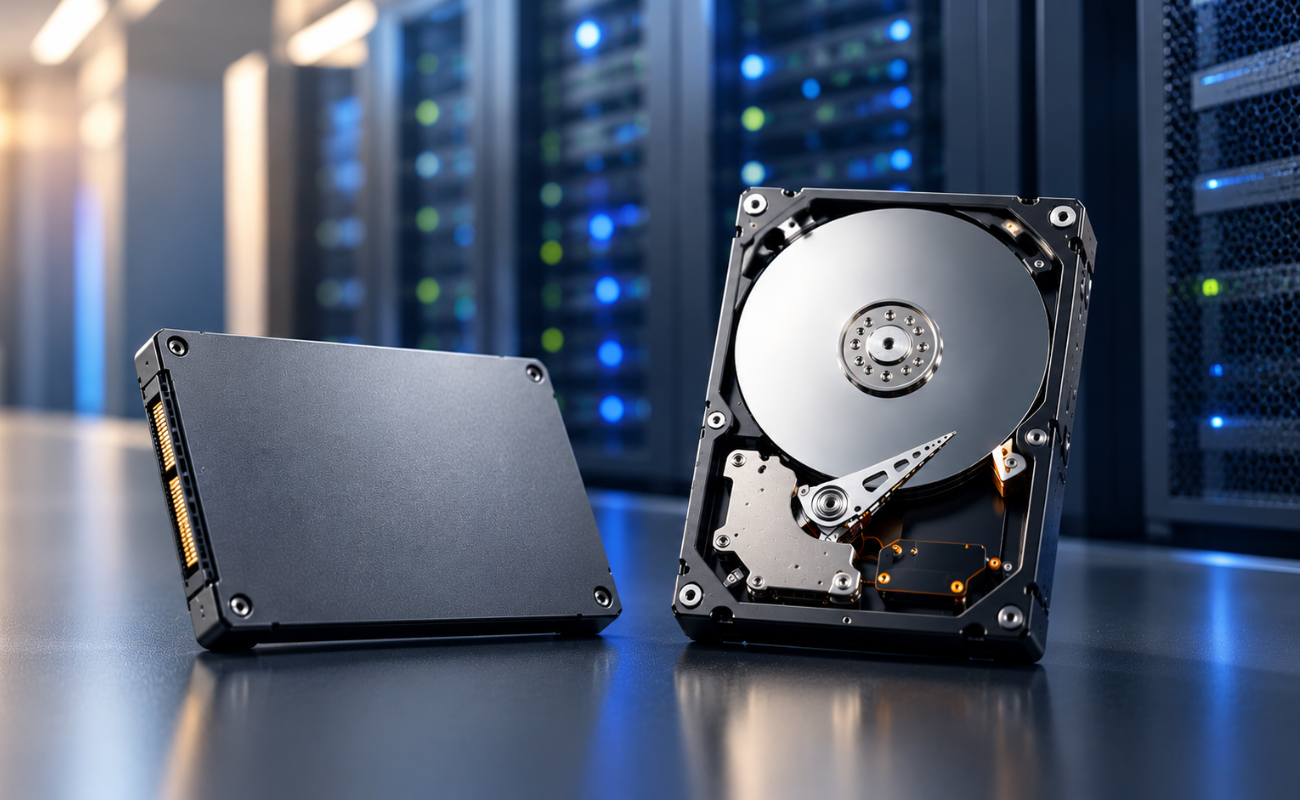
SSDs use flash memory technology, resulting in lower latency, faster boot times, and improved application performance.
Many organizations now combine SSDs with other storage solutions to maximize efficiency and performance.
Frequently accessed data is stored on fast SSDs, while less critical data is stored on traditional hard drives.
Hybrid systems provide an excellent balance between speed and affordability.
Cloud platforms allow organizations to store data securely on remote servers accessible through the internet.
Cloud storage improves operational flexibility while reducing infrastructure complexity.
DAS solutions are simple, fast, and highly effective for businesses needing dedicated local storage.
DAS remains a reliable storage option for organizations with straightforward storage requirements.
Unlike traditional file systems, object storage uses metadata and unique identifiers to organize data efficiently.
Object storage is increasingly important for modern cloud-driven infrastructures.
Modern backup solutions provide automated protection and rapid recovery capabilities.
Reliable backup storage is critical for minimizing downtime and protecting business operations.
Selecting the right storage infrastructure depends on several important factors.
Small businesses may prioritize affordability and simplicity, while large enterprises often require advanced scalability and redundancy.
Applications such as virtualization and databases require faster storage systems like SSDs and SANs.
Businesses should choose storage systems capable of supporting future growth.
Sensitive data requires encryption, backup systems, and advanced access controls.
Organizations should balance performance, reliability, and long-term costs.
Storage technology continues evolving rapidly.
Artificial intelligence is improving storage optimization and predictive maintenance.
NVMe technology provides ultra-fast data transfer speeds for enterprise environments.
More businesses are moving workloads to cloud storage platforms.
Modern storage systems now include advanced ransomware protection and encryption features.
Energy-efficient storage solutions are becoming increasingly important for sustainability.
Businesses investing in modern storage systems gain several advantages.
Employees can access data faster and work more efficiently.
Advanced backup systems reduce the risk of data loss.
Reliable storage infrastructure improves business continuity.
Organizations can expand storage capacity as needed.
Efficient storage management reduces operational expenses over time.
Modern businesses depend heavily on reliable and efficient storage systems to support daily operations, protect critical data, and enable long-term growth. Traditional storage methods are no longer sufficient for handling today’s increasing data demands and performance requirements.
The 8 smart storage options covered in this guide provide powerful solutions for improving efficiency, enhancing security, and supporting modern business infrastructure. Whether your organization needs centralized file sharing, high-speed enterprise storage, cloud scalability, or advanced backup systems, choosing the right storage solution can significantly improve operational performance.
Investing in smart storage infrastructure helps businesses stay competitive, reduce downtime, improve productivity, and prepare for future digital transformation initiatives.
No account yet?
Create an AccountContact us