














































A firewall Configuration is one of the most important security components in any modern business network. It controls traffic between trusted and untrusted networks, helps enforce security policies, and can prevent unauthorized access to critical systems.
However, simply installing a firewall does not automatically make a network secure.
A firewall that is poorly configured can leave security gaps, create unnecessary exposure, block legitimate business traffic, or make troubleshooting much harder. In some cases, organizations purchase advanced firewall appliances but fail to use their security features correctly.
For small and medium businesses especially, proper firewall configuration is essential because a single mistake can affect the entire network.
In this guide, we will cover 9 common firewall configuration mistakes to avoid, explain why they happen, and provide practical ways to build a more secure and reliable firewall environment.
Why Proper Firewall Configuration Matters
A firewall is designed to enforce rules that determine which network Configuration traffic should be allowed or blocked.
A typical business firewall may manage:
- Internet traffic
- Internal network traffic
- VPN connections
- Remote access
- Application traffic
- Web filtering
- Network segmentation
- Intrusion prevention
- Security policies
A firewall Configuration therefore acts as more than a simple barrier between the internet and the internal network.
Its effectiveness depends heavily on how it is configured.
Even a high-end enterprise firewall can become a security risk when administrators:
- Allow unnecessary ports
- Create overly broad rules
- Ignore logs
- Use weak administrative credentials
- Fail to update firmware
- Forget old rules
- Expose management interfaces
Understanding these mistakes is the first step toward creating a stronger security posture.
1. Using Overly Permissive Firewall Rules
One of the most common mistakes is creating rules that allow more traffic than necessary.
For example, an administrator may create a rule that allows an entire subnet, a large range of ports, or unrestricted internet access simply because it is convenient.
Although this may make configuration easier, it increases the attack surface.
Why Is This Dangerous?
A broad rule may accidentally allow:
- Unauthorized applications
- Unnecessary network services
- Suspicious outbound traffic
- Access to sensitive resources
Instead of creating one extremely broad rule, organizations should use more specific policies.
A good firewall rule should define:
- Source
- Destination
- Service or port
- Protocol
- Action
- Schedule when appropriate
Better Approach
Follow the principle of least privilege.
Only allow the traffic that is genuinely required for business operations.
The more precise your rules are, the easier it becomes to control and monitor network activity.
2. Opening Unnecessary Ports
Network ports are essential for communication, but every exposed port can potentially become an entry point for attackers.
Common examples include:
- HTTP
- HTTPS
- FTP
- SSH
- RDP
- SMTP
Opening ports without understanding why they are needed can create unnecessary exposure.


How to Avoid This Mistake
Before opening a port, ask:
Why is this port required?
Then verify:
- Which application uses it?
- Which internal device needs it?
- Who should be able to access it?
- Should access be restricted to specific IP addresses?
- Is there a more secure alternative?
Close ports that are no longer required.
Regularly review internet-facing services to ensure that every exposed service has a legitimate business purpose.
3. Failing to Update Firewall Firmware
Firewalls are security devices, which means they can also contain software vulnerabilities.
Manufacturers regularly release:
- Firmware updates
- Security patches
- Bug fixes
- Feature updates
Ignoring these updates can leave known vulnerabilities unaddressed.

Why Updates Matter
Attackers frequently target vulnerabilities in internet-facing devices because these systems are directly exposed to external traffic.
Regular updates can help address:
- Security vulnerabilities
- Performance problems
- Compatibility issues
- Stability problems
Best Practice
Establish a maintenance schedule for reviewing firewall updates.
Before applying major updates:
- Review the vendor’s release notes.
- Back up the firewall configuration.
- Schedule the update during an appropriate maintenance window.
- Verify services after the update.
4. Using Weak Administrative Passwords
Another major mistake is failing to secure the firewall’s administrative interface.
A firewall controls the security policy for the network. If an attacker gains administrative access, they may be able to completely change the security configuration.
Weak passwords can include:
- Simple words
- Company names
- Common patterns
- Reused credentials
- Default passwords
How to Improve Administrative Security
Use:
- Strong unique passwords
- Multi-factor authentication was supported
- Role-based access
- Account lockout controls
- Secure management protocols
Administrative access should also be restricted to trusted networks or management systems whenever possible.
Avoid exposing the firewall’s management interface directly to the public internet unless there is a specific security requirement and strong controls around it.
5. Ignoring Firewall Logs and Alerts
A firewall can generate valuable information about what is happening on your network.
However, some organizations configure the firewall and then rarely check the logs.
This means potential security events may go unnoticed.

Firewall logs can help identify:
- Repeated failed connections
- Unusual outbound traffic
- Port scanning activity
- Blocked attacks
- Unexpected application behavior
- Authentication failures
Why Monitoring Matters
A blocked connection is not necessarily evidence of an attack, but unusual patterns can reveal potential security problems.
For example, a sudden increase in connection attempts from an unknown external address may justify further investigation.
Better Practice
Create a routine for:
- Reviewing security logs
- Investigating unusual events
- Configuring alerts
- Retaining important logs
- Integrating firewall monitoring with other security tools
6. Leaving Old or Unused Firewall Rules in Place
Networks change over time.
Applications are removed. Servers are replaced. Employees change roles. Projects end.
Yet firewall rules are often left behind.
These old rules can become unnecessary security risks.
For example, a rule created for a temporary application several years ago may still allow traffic to a server that no longer needs it.
Why Rule Cleanup Matters
Unused rules can:
- Increase complexity
- Create security gaps
- Make troubleshooting harder
- Make audits more difficult
Recommended Practice
Conduct periodic firewall rule reviews.
For each rule, determine:
- Is it still needed?
- Who uses it?
- What system does it support?
- When was it last used?
- Can it be restricted further?
If a rule has no legitimate purpose, remove it according to your organization’s change-management procedures.
7. Not Segmenting the Network
Keeping every device on the same network can increase the impact of a security incident.
For example, if an attacker compromises a workstation and everything is connected to one flat network, the attacker may have an easier path toward servers, storage, or administrative systems.
Network segmentation can limit this risk.
Common segments may include:
- Employee devices
- Servers
- Guest Wi-Fi
- IoT devices
- VoIP systems
- Management networks

Benefits of Segmentation
Segmentation can help:
- Limit lateral movement
- Protect critical systems
- Separate guest traffic
- Improve policy control
- Simplify troubleshooting
Firewalls can play an important role in controlling traffic between these network segments.
8. Forgetting Outbound Traffic Controls
Many firewall configurations focus heavily on incoming traffic.
However, outbound traffic is also important.
Why?
Because if malware infects an internal machine, it may attempt to communicate with an external command-and-control server.
Without appropriate outbound controls, compromised devices may be able to establish unauthorized connections.
Outbound Policies Can Help Identify:
- Suspicious applications Configuration
- Unexpected destinations
- Malware communication
- Unauthorized services
Better Approach
Use outbound policies where appropriate to control sensitive traffic.
For example, certain servers may only need to communicate with specific external services.
Restricting unnecessary outbound access can add another layer of protection.
9. Not Testing Firewall Rules Before Deployment
Another common mistake is making configuration changes without properly testing their impact.
A new firewall rule may:
- Block legitimate applications
- Break remote access
- Interrupt VPN connectivity
- Prevent employees from reaching required systems
At the same time, a poorly designed security rule could unintentionally allow traffic that should remain blocked.
Use a Controlled Change Process
Before implementing important firewall changes:
1. Document the Requirement
Understand why the rule is needed.
2. Define the Scope
Specify exactly which users, systems, services, and destinations are involved.
3. Back Up the Configuration
Always maintain a recent configuration backup.
4. Test Carefully
Where practical, test changes in a controlled environment or during a planned maintenance window.
5. Monitor After Deployment
Check logs and application behavior after implementing the rule.
This reduces the risk of unexpected outages.
Frequently Asked Questions
What is the most common firewall configuration mistake?
One of the most common mistakes is allowing overly broad traffic through the firewall instead of creating specific rules based on business requirements.
How often should firewall rules be reviewed?
Organizations should establish a regular review process and also review rules whenever systems, applications, or network requirements change.
Should all ports be closed?
Unused and unnecessary ports should generally not be exposed. Required services should be limited to the appropriate source networks, destinations, and users.
Is a firewall enough to protect a business network?
No. A firewall is an important security layer, but businesses should combine it with endpoint protection, secure authentication, backups, monitoring, and other controls.
Should firewall management be accessible from the internet?
Direct public exposure should generally be avoided unless there is a specific requirement and appropriate security controls are in place.
Shop now
Sold out

Sold out
Sold out

Sold out
Sold out
Sold out
Related posts
VPN Firewall vs Standard Firewall: 7 Key Differences

Businesses need reliable network security to protect sensitive information, prevent unauthorized access, and maintain secure commu...

Rack Server vs Tower Server: 6 Key Differences Explained

Rack Server vs Tower Server: 6 Key Differences Explained
Choosing between a rack server and a tower server is an important decisi...

SSD vs HDD Storage: 8 Key Differences Every Business Should Know
SSD vs HDD Storage: 8 Key Differences Every Business Should Know
Choosing the right storage technology is essential for businesse...
Router Performance Explained: 7 Factors That Affect Your Internet Speed

Router performance plays a critical role in determining how efficiently a business network handles daily operations. From cloud-ba...
10 Router Security Features That Help Protect Business Networks
Business networks are constantly exposed to security risks, from unauthorized access and malicious traffic to compromised devices ...
Stateful Firewall vs Next-Generation Firewall: 8 Major Differences
Firewalls play a critical role in protecting business networks from unauthorized access, suspicious traffic, and cyber threats. Ho...

7 Firewall NGFW Types Compared for Business Network Security
Choosing the right NGFW firewall is an important part of protecting business networks fro...
11 Server Features Every IT Manager Should Look For
11 Server Features Every IT Manager Should Look For
Choosing the right server is an important decision for any organization. Serv...

Best RAM Options for Performance Workstations
Best RAM Options for Performance Workstations
Modern performance workstations are built for demanding workloads such as 3D render...
Dual-WAN vs Single-WAN Routers: 6 Key Differences Compared
Modern businesses rely heavily on stable Internet connectivity for cloud applications, communication, online platforms, remote acc...
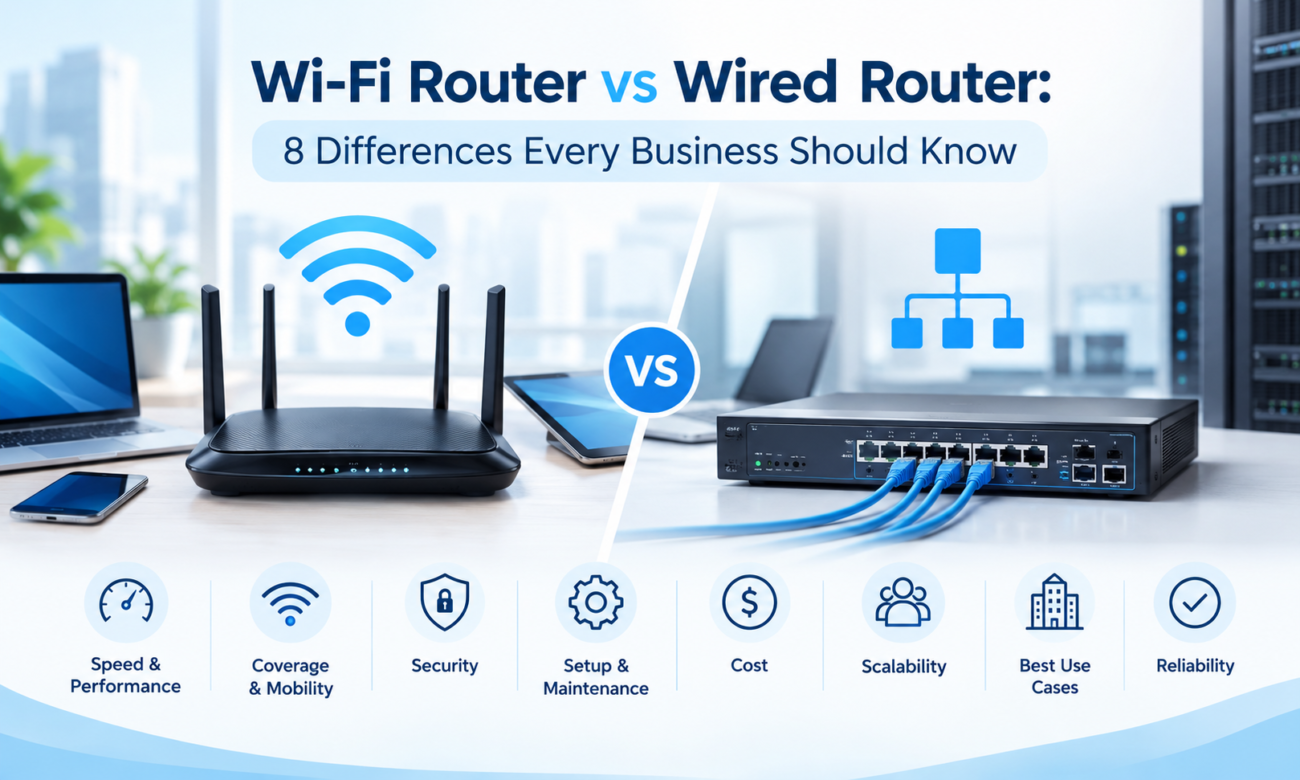
Wi-Fi Router vs Wired Router: 8 Differences Every Business Should Know
Choosing the right networking equipment is an important decision for any business. As organizations become increasingly dependent ...

Storage Buying Guide: 7 Things to Consider Before You Choose
Storage Buying Guide: 7 Things to Consider Before You Choose
Modern businesses generate and manage large amounts of data every da...
