













































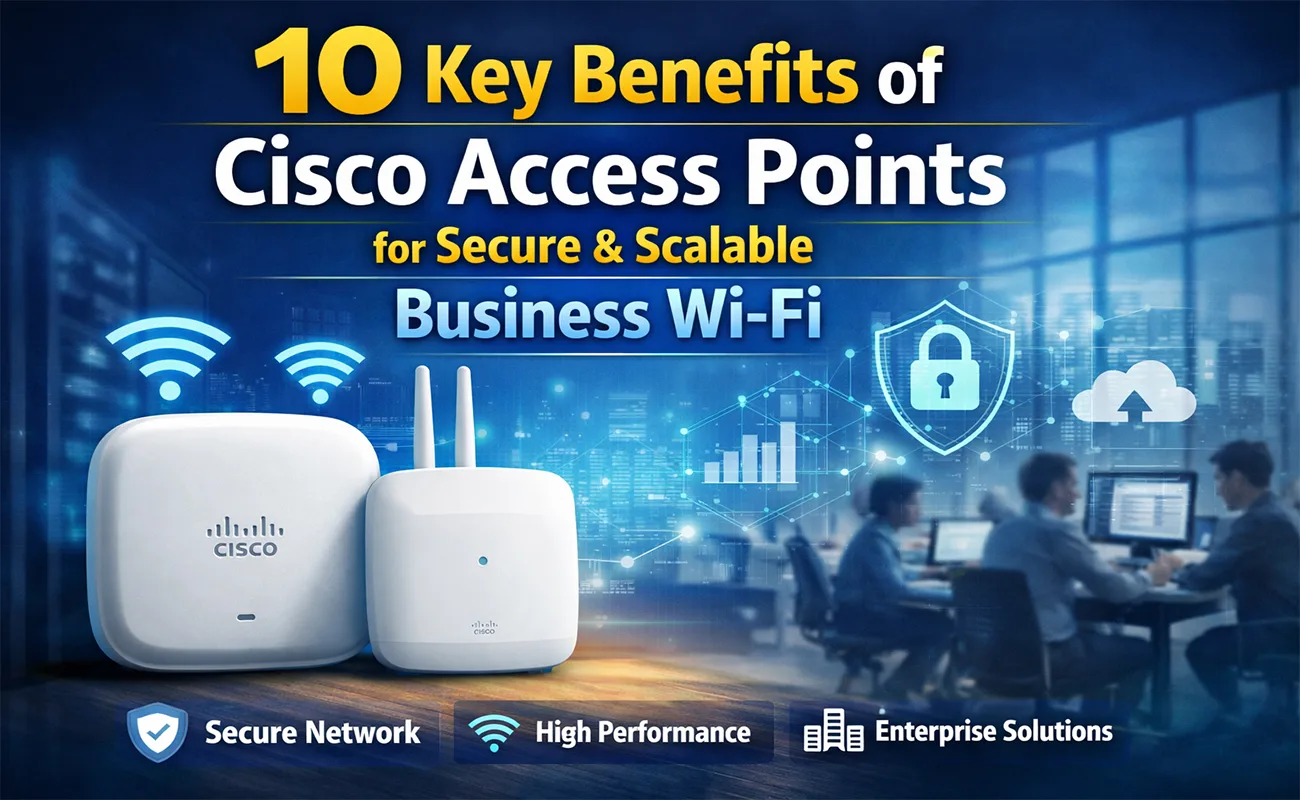
Cisco Access Points for Business: Secure and Scalable Wireless Solutions
In today’s digital-first business environment, reliable and secure wireless connectivity is no longer a luxury—it is a necessity. From small offices and retail stores to large enterprises, hospitals, universities, and industrial facilities, businesses depend on high-performance Wi‑Fi to support daily operations, cloud applications, collaboration tools, and Internet of Things (IoT) devices.
Cisco Access Points (APs) have become one of the most trusted choices for business wireless networking. Known for their enterprise-grade security, scalability, and advanced management capabilities, wireless access points help organizations build robust Wi‑Fi infrastructures that can grow with their needs.
This comprehensive guide explores Access Points for Business, focusing on how they deliver secure and scalable wireless networks. We will cover features, benefits, deployment models, security technologies, scalability options, and why Cisco remains a top choice for organizations worldwide.
What Are Cisco Access Points?
Access Points are networking devices that provide wireless connectivity to users and devices within a local area network (LAN). They connect to a wired network and broadcast Wi‑Fi signals, allowing laptops, smartphones, tablets, IP phones, and IoT devices to access the network securely.
Cisco offers a wide portfolio of access points designed for different environments, including:
- Small and medium-sized businesses (SMBs)
- Large enterprises
- Campuses and universities
- Healthcare facilities
- Retail and hospitality
- Warehouses and industrial sites
These access points support the latest Wi‑Fi standards, advanced security protocols, and centralized management platforms, making them ideal for modern business needs.
Why Choose Cisco Access Points for Business?
Businesses choose Cisco Access Points because they combine performance, reliability, and security in a single ecosystem. Below are the key reasons why Cisco stands out in the enterprise wireless market.
1. Enterprise-Grade Security
Security is a top priority for any business network. Access Points integrate advanced security features such as:
- WPA3 encryption
- Secure authentication (802.1X)
- Identity-based access control
- Threat detection and prevention
These features protect sensitive business data and ensure only authorized users and devices can access the network.
2. High Performance and Reliability
APs are built to handle high user densities and bandwidth-intensive applications. They deliver consistent performance even in crowded environments like conference halls, offices, and campuses.
3. Scalability for Growing Businesses
Whether you are deploying a few access points in a small office or thousands across multiple locations, wireless solutions scale seamlessly. Businesses can start small and expand without redesigning their entire network.
4. Centralized Management
Cisco offers powerful management tools that allow IT teams to configure, monitor, and troubleshoot wireless networks from a single dashboard. This reduces operational complexity and improves network visibility.
Cisco Access Point Product Families
Provides several access point families to meet different business requirements. Each family is designed with specific use cases in mind.
Cisco Catalyst Access Points
Cisco Catalyst Access Points are designed for enterprise-grade deployments. They support the latest Wi‑Fi standards, including Wi‑Fi 6 and Wi‑Fi 6E, delivering high speed, low latency, and improved efficiency.
Key features include:
- High throughput and capacity
- Advanced security integrations
- Seamless integration with Catalyst switches
- Ideal for large enterprises and campuses
Cisco Meraki Access Points
Cisco Meraki Access Points are cloud-managed and ideal for businesses looking for simplicity and flexibility.
Benefits include:
- Cloud-based management dashboard
- Zero-touch provisioning
- Easy scalability across multiple sites
- Built-in analytics and reporting
Meraki APs are popular with SMBs, retail chains, and distributed organizations.
Cisco Aironet Access Points
Access Points are known for reliability and advanced RF capabilities. They are commonly used in environments that require stable and predictable wireless performance.
Secure Wireless Networking with Cisco Access Points
Security is one of the strongest advantages of wireless solutions. Cisco integrates security at every layer of the wireless network.
WPA3 and Advanced Encryption
Access Points support WPA3, the latest Wi‑Fi security standard, providing stronger encryption and protection against brute-force attacks.
Identity-Based Access Control
By integrating with Identity Services Engine (ISE), enable identity-based policies. This means access decisions are based on who the user is, what device they are using, and where they are connecting from.
Network Segmentation
Allows businesses to segment their wireless networks into multiple virtual networks (VLANs). This isolates guest traffic, employee devices, and IoT systems, reducing the risk of lateral attacks.
Threat Detection and Prevention
Wireless solutions include built-in tools to detect rogue access points, unauthorized devices, and suspicious behavior, helping IT teams respond quickly to threats.
Scalability: From Small Offices to Large Enterprises
One of the biggest strengths of Cisco Access Points is their scalability.
Small and Medium Businesses (SMBs)
For SMBs, offers cost-effective access points that are easy to deploy and manage. Businesses can start with a few APs and expand as their workforce grows.
Enterprise and Campus Networks
Large organizations benefit from Cisco’s controller-based or cloud-managed architectures. These solutions support thousands of access points and users across multiple buildings and locations.
Multi-Site Deployments
Cisco Meraki Access Points are especially well-suited for multi-site businesses. IT teams can manage all locations from a single cloud dashboard, ensuring consistent policies and configurations.
Wi‑Fi 6 and Wi‑Fi 6E with Cisco Access Points
Modern businesses require fast and efficient wireless connectivity. Access Points support the latest Wi‑Fi standards.

Benefits of Wi‑Fi 6
Wi‑Fi 6 (802.11ax) offers:
- Higher speeds
- Improved performance in high-density environments
- Better battery life for connected devices
- Reduced latency
Wi‑Fi 6E for Future-Ready Networks
Wi‑Fi 6E extends Wi‑Fi 6 into the 6 GHz band, providing more spectrum and less interference. Access Points with Wi‑Fi 6E are ideal for businesses planning for future growth and next-generation applications.
Cisco Access Points for Different Industries
Wireless solutions are used across a wide range of industries.
Healthcare
Hospitals and clinics rely on secure and reliable Wi‑Fi for medical devices, electronic health records, and staff communication. Cisco Access Points provide the security and uptime required in healthcare environments.
Education
Schools and universities use Cisco APs to support online learning, virtual classrooms, and campus-wide connectivity for thousands of students and devices.
Retail and Hospitality
Retail stores and hotels use wireless networks to enhance customer experiences, support point-of-sale systems, and enable guest Wi‑Fi with secure segmentation.
Manufacturing and Warehousing
Industrial-grade Access Points support connectivity in challenging environments, ensuring reliable communication for automation and IoT systems.
Deployment and Management Options
Cisco offers flexible deployment models to match different IT strategies.
On-Premises Controllers
Businesses that prefer on-site control can use wireless controllers to manage access points centrally.
Cloud Management with Meraki
Meraki provides a fully cloud-managed solution, reducing the need for on-premises infrastructure and simplifying network management.
Hybrid Approaches
Some organizations choose a hybrid model, combining on-premises and cloud management for maximum flexibility.
Best Practices for Choosing Cisco Access Points
When selecting Cisco APs for your business, consider the following:
- Coverage requirements – Size and layout of your space
- User density – Number of concurrent users and devices
- Security needs – Compliance and data protection requirements
- Scalability – Future growth plans
- Management preferences – Cloud vs on-premises
Offers solutions for all these scenarios, making it easier to find the right fit.
Conclusion
Cisco Access Points for Business provide a powerful combination of security, scalability, and performance. Whether you are a small business looking for reliable Wi‑Fi or a large enterprise managing complex wireless environments, offers solutions that meet your needs today and in the future.
With advanced security features, support for the latest Wi‑Fi standards, and flexible management options, Cisco Access Points remain a trusted choice for organizations worldwide. Investing in Cisco wireless technology means investing in a secure, scalable, and future-ready network that supports business growth and digital transformation.
By building your wireless infrastructure on Access Points, you ensure that your business stays connected, protected, and prepared for tomorrow’s challenges.
While Cisco Access Points provide secure and scalable wireless connectivity, network switches play a critical role in overall performance. Read our Cisco vs Juniper Switches comparison to see which brand offers better performance for business networks.
Shop now
Sold out

Sold out

Sold out
Sold out
Sold out
Related posts

VPN Firewall vs Standard Firewall: 7 Key Differences

Businesses need reliable network security to protect sensitive information, prevent unauthorized access, and maintain secure commu...

Rack Server vs Tower Server: 6 Key Differences Explained

Rack Server vs Tower Server: 6 Key Differences Explained
Choosing between a rack server and a tower server is an important decisi...

SSD vs HDD Storage: 8 Key Differences Every Business Should Know
SSD vs HDD Storage: 8 Key Differences Every Business Should Know
Choosing the right storage technology is essential for businesse...
Router Performance Explained: 7 Factors That Affect Your Internet Speed

Router performance plays a critical role in determining how efficiently a business network handles daily operations. From cloud-ba...
10 Router Security Features That Help Protect Business Networks
Business networks are constantly exposed to security risks, from unauthorized access and malicious traffic to compromised devices ...

Stateful Firewall vs Next-Generation Firewall: 8 Major Differences
Firewalls play a critical role in protecting business networks from unauthorized access, suspicious traffic, and cyber threats. Ho...

7 Firewall NGFW Types Compared for Business Network Security
Choosing the right NGFW firewall is an important part of protecting business networks fro...

11 Server Features Every IT Manager Should Look For
11 Server Features Every IT Manager Should Look For
Choosing the right server is an important decision for any organization. Serv...
Best RAM Options for Performance Workstations
Best RAM Options for Performance Workstations
Modern performance workstations are built for demanding workloads such as 3D render...

Dual-WAN vs Single-WAN Routers: 6 Key Differences Compared
Modern businesses rely heavily on stable Internet connectivity for cloud applications, communication, online platforms, remote acc...
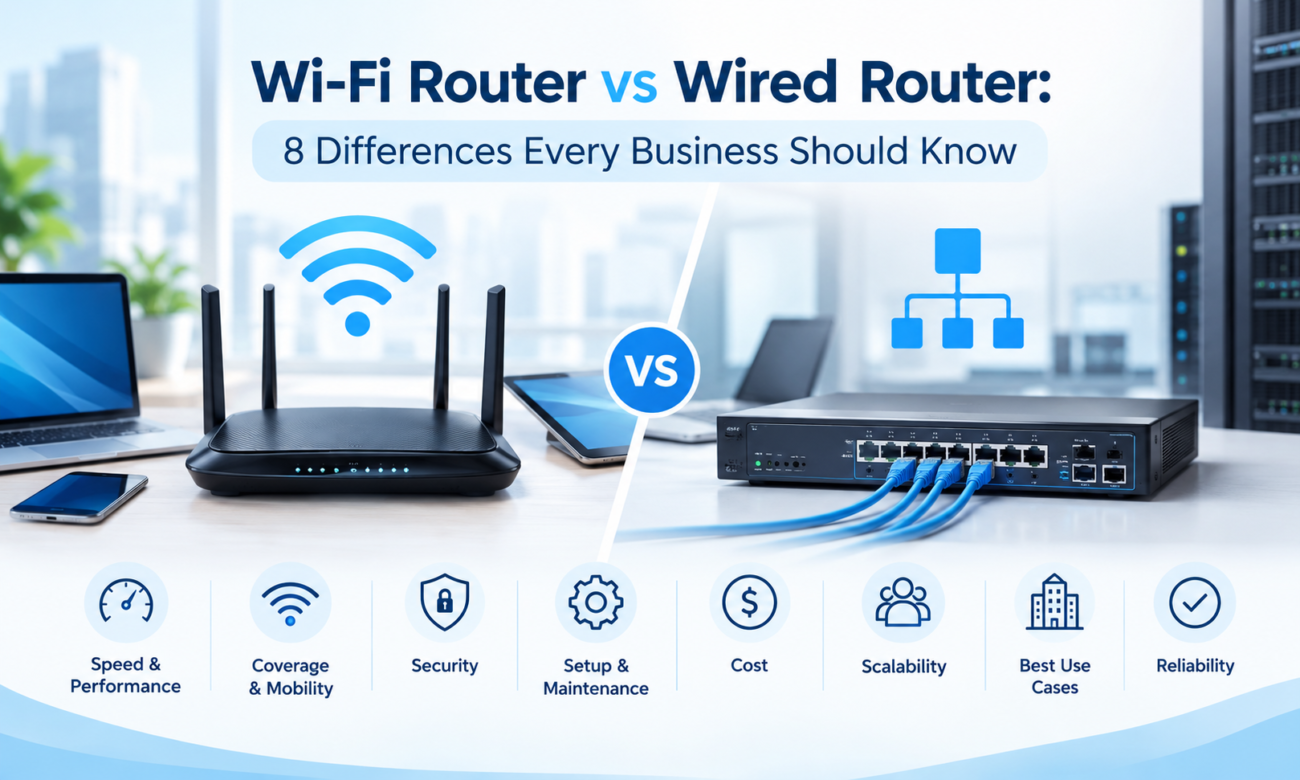
Wi-Fi Router vs Wired Router: 8 Differences Every Business Should Know
Choosing the right networking equipment is an important decision for any business. As organizations become increasingly dependent ...

Storage Buying Guide: 7 Things to Consider Before You Choose
Storage Buying Guide: 7 Things to Consider Before You Choose
Modern businesses generate and manage large amounts of data every da...
