













































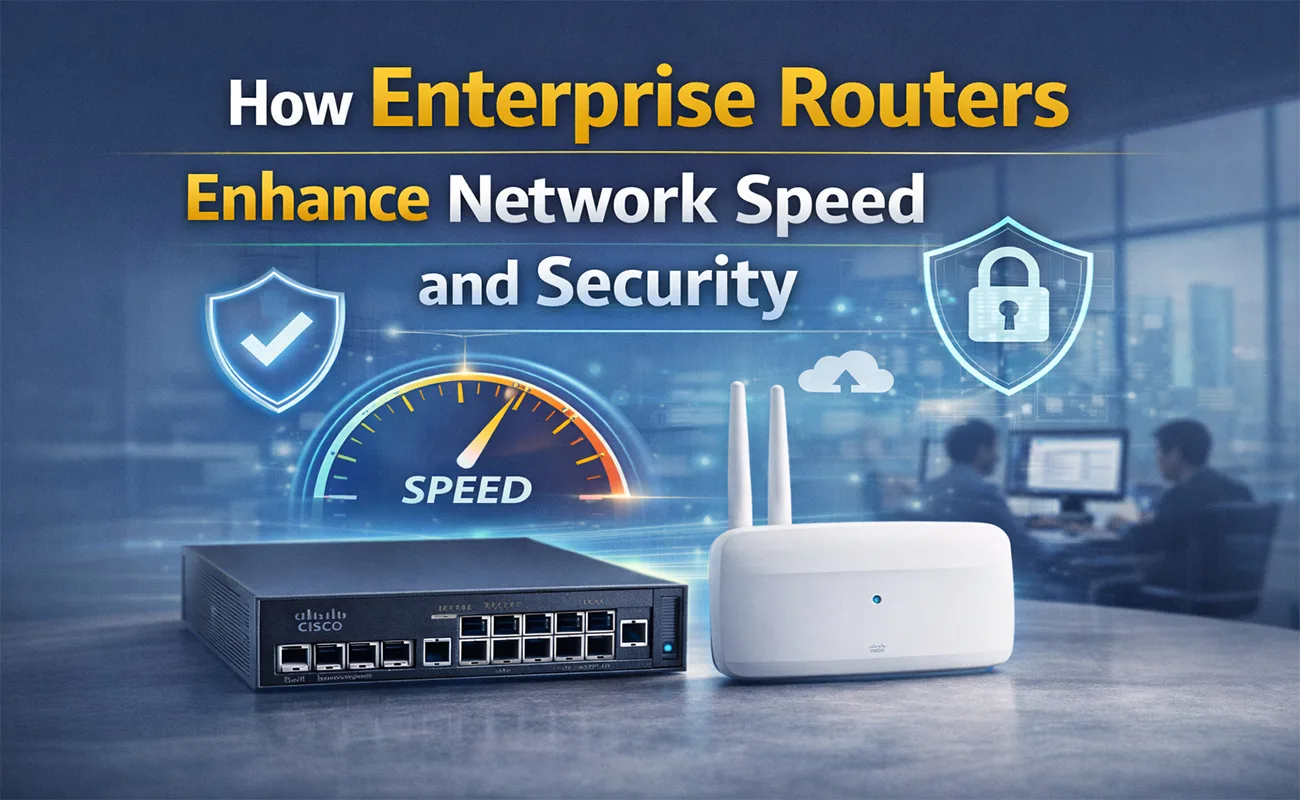
How Enterprise Routers Enhance Network Speed and Security?
In today’s highly connected digital world, businesses rely heavily on fast, secure, and stable networks to operate efficiently. From cloud applications and video conferencing to data centers and remote work environments, network performance directly impacts productivity and security. This is where enterprise routers play a critical role.
Routers are designed to handle high traffic volumes, advanced security requirements, and complex network architectures. Unlike basic or consumer-grade routers, routers offer enhanced speed, reliability, and robust security features that protect business data and ensure uninterrupted connectivity.
In this in-depth guide, we explore how routers enhance network speed and security, why they are essential for modern organizations, and how businesses can benefit from investing in enterprise-grade routing solutions.
What Is an Enterprise Router?
An enterprise router is a high-performance networking device used to connect multiple networks, manage data traffic, and provide secure communication between internal systems and external networks such as the internet or cloud services.
Routers are commonly used in:
- Corporate offices
- Data centers
- Branch offices
- Large campuses
- Service provider environments
They are built to support advanced routing protocols, high throughput, redundancy, and enterprise-level security, making them ideal for mission-critical business operations.
Enterprise Routers vs Consumer Routers
Understanding the difference between routers and consumer routers highlights why businesses need enterprise-grade solutions.

Performance and Speed
Consumer routers are designed for light usage with limited devices. routers, on the other hand, support:
- High-speed data transfer
- Large numbers of concurrent connections
- Advanced traffic management
Security Capabilities
Routers include built-in security features such as firewalls, VPNs, intrusion prevention systems, and encryption, which are rarely available or limited in consumer routers.
Scalability and Reliability
Routers are designed to scale as businesses grow, offering redundancy, failover, and load balancing features to ensure continuous uptime.
How Enterprise Routers Enhance Network Speed
Network speed is essential for business efficiency. Routers use advanced technologies to optimize data flow and reduce latency.
High Throughput and Processing Power
Enterprise routers are equipped with powerful processors and high memory capacity, allowing them to process large volumes of data simultaneously without performance degradation.
Advanced Routing Protocols
Protocols such as OSPF, BGP, and EIGRP enable enterprise router to choose the most efficient paths for data transmission, improving speed and reducing congestion.
Quality of Service (QoS)
QoS allows businesses to prioritize critical applications such as VoIP, video conferencing, and ERP systems, ensuring optimal performance even during peak traffic periods.
Load Balancing
Router Distribute traffic across multiple links, preventing bottlenecks and improving overall network performance.
How Enterprise Routers Improve Network Security
Security is one of the most important reasons businesses invest in routers.
Integrated Firewall Protection
Most enterprise routers include stateful firewalls that monitor and control incoming and outgoing traffic based on predefined security rules.
Virtual Private Networks (VPNs)
Routers support secure VPN connections, enabling remote employees and branch offices to access the corporate network safely.
Intrusion Detection and Prevention
Advanced routers can detect suspicious activity, block malicious traffic, and prevent cyberattacks before they impact the network.
Encryption and Secure Authentication
Enterprise routers use strong encryption standards and authentication methods to protect sensitive data from unauthorized access.
Scalability and Network Growth
As businesses expand, their networks must scale accordingly. routers are designed to grow with the organization.
Multi-Site Connectivity
Routers enable secure and high-speed connectivity between multiple branches, data centers, and cloud environments.
Support for Cloud and Hybrid Networks
Modern enterprise routers integrate seamlessly with cloud platforms, supporting hybrid and multi-cloud architectures.
Modular and Upgradable Design
Many enterprise routers offer modular components and software upgrades, allowing businesses to enhance performance and features without replacing hardware.
Leading Enterprise Router Brands (Examples)
To better understand how enterprise routers enhance network speed and security, it is useful to look at some of the most trusted brands in the networking market. These vendors are widely adopted by businesses due to their reliability, advanced features, and strong security capabilities.
Cisco Enterprise Routers
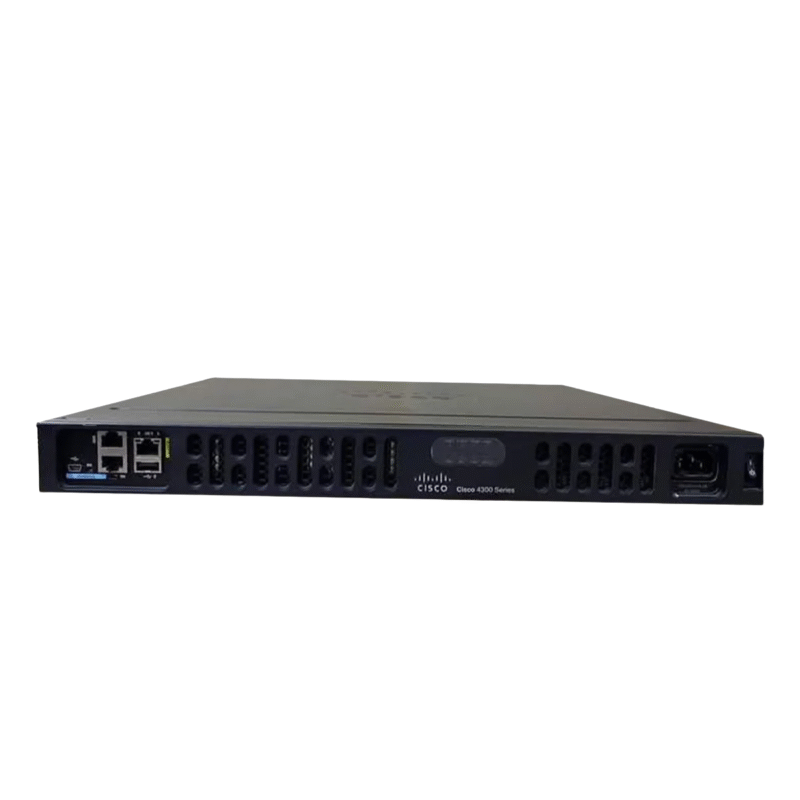
Cisco is a global leader in enterprise networking solutions. Cisco routers are known for their high performance, scalability, and deep integration with security and cloud technologies.
Key strengths:
- Advanced routing protocols (OSPF, BGP, EIGRP)
- Built-in security features including firewalls and VPNs
- Strong SD-WAN and cloud integration
- Ideal for large enterprises and multi-branch networks
Fortinet (FortiGate Routers)
Fortinet routers combine routing and security in a single platform. FortiGate devices are especially popular for businesses that prioritize cybersecurity alongside performance.
Key strengths:
- Integrated firewall and threat protection
- High-speed VPN performance
- Centralized security management
- Excellent choice for security-driven organizations
Juniper Networks Routers
Juniper routers are well-known for stability, high throughput, and service provider-grade performance. They are commonly used in large data centers.
Key strengths:
- High reliability and uptime
- Advanced traffic engineering
- Strong automation and network visibility
- Suitable for large-scale environments
Huawei Enterprise Routers
Huawei offers cost-effective routing solutions with competitive performance and scalability. These routers are widely used in enterprise and service provider networks.
Key strengths:
- High performance at competitive pricing
- Strong support for WAN and SD-WAN
- Suitable for branch and campus networks
- Scalable solutions for growing businesses
MikroTik Enterprise Routers
MikroTik is a well-known brand in the enterprise and ISP networking market, offering powerful routing solutions at highly competitive prices. MikroTik routers are widely used by small to medium, service providers, and branch offices that require flexibility, performance, and advanced routing features.
Key strengths:
- Excellent performance-to-cost ratio
- Advanced routing and firewall capabilities
- Strong support for ISP use cases
- Highly customizable through RouterOS
Popular MikroTik Router Models
- MikroTik Cloud Core Router CCR1036-8G-2S+
- MikroTik Router BOARD RB2011UiAS-RM
- MikroTik Cloud Core Router CCR1016-12G
Routers for Different Business Environments
Routers are used across various industries to support unique networking needs.
Corporate Offices
They ensure fast and secure connectivity for employees, applications, and collaboration tools.
Data Centers
Routers manage massive data flows, ensure redundancy, and maintain secure connections between servers and external networks.
Retail and Branch Networks
Retail chains use routers to connect multiple locations securely while maintaining centralized control.
Remote Work and SD-WAN
Routers play a key role in SD-WAN solutions, providing secure and optimized connectivity for remote and distributed teams.
Best Practices for Choosing an Enterprise Router
When selecting a router, businesses should consider:
- Network size and traffic volume
- Security and compliance requirements
- Support for advanced routing protocols
- Scalability and future growth
- Integration with existing infrastructure

Choosing the right router ensures long-term performance, security, and reliability.
Conclusion
Enterprise routers are the backbone of modern business networks. By delivering high-speed performance, advanced traffic management, and robust security, they enable organizations to operate efficiently and securely in an increasingly digital world.
Investing in routing solutions helps businesses protect their data, support growth, and maintain reliable connectivity across all locations. Whether for corporate offices, data centers, or cloud-connected environments, routers remain a critical component of any secure and high-performance network infrastructure.
To build a fully secure network, routers must work alongside reliable wireless infrastructure. Learn how Cisco Access Points for Business provide secure and scalable wireless connectivity to complement enterprise-grade routers.
Shop now
Sold out

Sold out

-70%
CompNet QSFP-40G-LR4S-X Transceiver
Original price was: EGP200.00.EGP60.00Current price is: EGP60.00. Tax excluded
-27%
Dell EMC PowerEdge R640 8×2.5″
Original price was: EGP31,500.00.EGP22,999.00Current price is: EGP22,999.00. Tax excluded

Sold out

Related posts

How to Choose the Right Business Router in 8 Simple Steps

Choosing the right router is one of the most important decisions when building or upgrading a business network. A router does far ...
How to Choose the Right Network Switch in 8 Simple Steps
Choosing the right networking equipment is an important decision for every modern business. Whether you are building a new office ...

7 Essential Network Switch Installation Tips for Better Performance
A high-quality network switch is only as effective as the way it is installed. Even the most advanced networking equipment can exp...
PoE vs Non-PoE Switches: 8 Powerful Key Differences Explained
If you're planning to upgrade your business network, one of the most important decisions you'll face is choosing between PoE vs No...

11 Scalable Servers for Growing Businesses

11 Scalable Servers for Growing Businesses
As businesses expand, their IT infrastructure must grow alongside them. Increasing wor...

6 Advanced Tower Servers to Improve Network Performance
6 Advanced Tower Servers to Improve Network Performance
As businesses continue to expand their digital operations, having a relia...

10 Smart Server Solutions for Secure Data Management
10 Smart Server Solutions for Secure Data Management
Data has become one of the most valuable assets for modern businesses. From ...
10 Top Switch Solutions to Enhance Performance
Modern businesses depend on fast, secure, and reliable networks to keep daily operations running smoothly. From transferring large...

6 Powerful Advanced Managed Switches for Business Networks
Modern businesses rely on fast, secure, and highly available networks to support daily operations, cloud applications, VoIP commun...

11 Powerful & Reliable Switches to Improve Network Efficiency
Every modern business depends on a reliable network to keep employees connected, support cloud applications, enable coll...

9 High Performance Servers to Maximize Efficiency
9 High Performance Servers to Maximize Efficiency
In today's digital economy, businesses need powerful and reliable infrastructur...

9 Powerful Switches for Modern Business Networks
Introduction
Modern businesses rely on stable, high-performance networks to support cloud applications, cybersecurity solutions, ...
