









































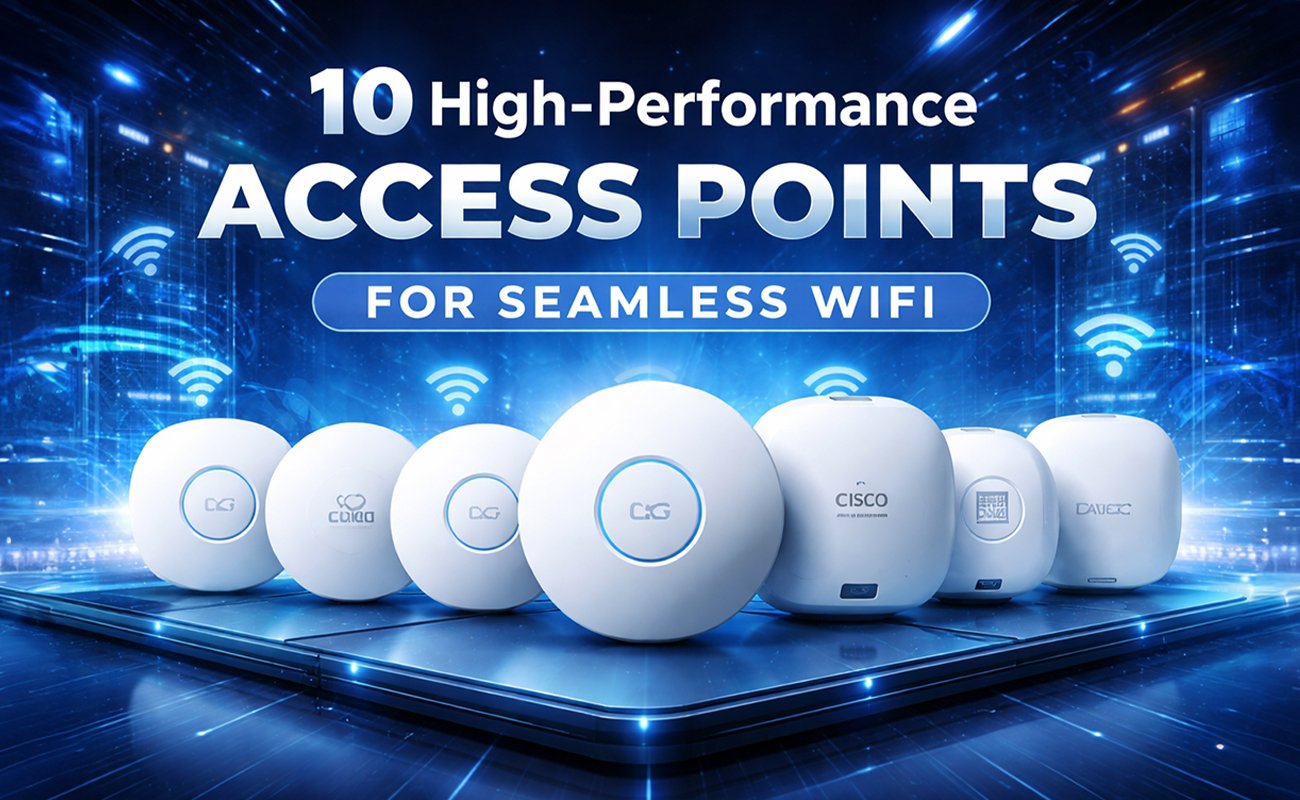
In today’s hyper-connected world, Wi-Fi is no longer a convenience—it’s critical infrastructure. From enterprises and startups to hospitals, universities, and even smart homes, the demand for fast, stable, and scalable wireless access and connectivity is higher than ever.
Traditional routers often struggle to keep up with modern demands such as:
- Dozens (or hundreds) of connected devices
- 4K/8K streaming
- Cloud-based workflows
- IoT ecosystems
- Real-time applications like VoIP and video conferencing
This is where high-performance wireless access points (APs) come in.
Unlike standard routers, access points are designed to:
- Deliver stronger, more reliable coverage
- Handle high-density user environments
- Scale easily across large areas
- Provide enterprise-grade security and management
Modern APs now leverage WiFi 6, WiFi 6E, and WiFi 7 technologies, which offer faster speeds, lower latency, and better performance in crowded environments.
In this blog, we’ll explore 10 of the best high-performance access points in 2026, their key features, and how to choose the right one for your needs.
1. Ubiquiti UniFi U7 Pro


The UniFi U7 Pro is one of the most advanced Wi-Fi 7 access points available today, built for high-density environments.
Key Features:
- WiFi 7 support with 6GHz band
- Up to 9.3 Gbps aggregate throughput
- 2.5GbE uplink for high-speed backhaul
- Centralized management via UniFi Controller
Why It Stands Out:
This AP is ideal for modern offices, co-working spaces, and tech-heavy environments. It delivers ultra-low latency and supports dozens of simultaneous users without performance drops.
2. Ubiquiti UniFi U6 Enterprise


The U6 Enterprise is a WiFi 6E powerhouse designed for high-capacity environments.
Key Features:
- 6GHz band support
- 400+ client capacity
- 4×4 MU-MIMO
- Seamless roaming
Best For:
- Enterprises
- Universities
- Large offices
It strikes a perfect balance between performance and cost, making it one of the most popular enterprise APs.
3. Cisco Catalyst 9130AX


Cisco’s Catalyst series represents top-tier enterprise networking.
Key Features:
- WiFi 6 support
- AI-powered RF optimization
- Built-in security (ETA, Clean Air)
- Integration with Cisco DNA Center
Why Choose It:
Cisco APs are known for unmatched reliability and security, making them ideal for mission-critical deployments like hospitals and government facilities.
4. Aruba AP-635 (HPE Aruba)


Aruba (by HPE) delivers enterprise-grade performance with advanced AI features.
Key Features:
- WiFi 6E tri-band support
- AI-based traffic optimization
- Built-in IoT radio (BLE/Zigbee)
- Cloud or on-prem management
Best Use Case:
- Smart offices
- IoT-heavy environments
To better understand how different access points compare in real-world performance, let’s take a closer look at the key differences in this detailed comparison: Aruba AP315 vs AP515: Key Differences Explained.
5. TP-Link Omada EAP787 (Wi-Fi 7)


The EAP787 is a powerful yet cost-effective Wi-Fi 7 solution.
Key Features:
- Tri-band WiFi 7 (2.4/5/6 GHz)
- Up to 15 Gbps speeds
- 10GbE uplink
- Supports 500+ clients
Why It’s Impressive:
It offers enterprise-level performance at a competitive price, making it ideal for large offices and campuses.
6. Ruckus R750


Ruckus is known for exceptional wireless performance in high-density environments.
Key Features:
- Wi-Fi 6
- Beam Flex+ adaptive antennas
- Handles hundreds of users
- Advanced interference mitigation
Best For:
- Stadiums
- Hotels
- Large venues
7. Huawei Air Engine 6760-X1


Huawei’s Air Engine series is built for high-performance enterprise networks.
Key Features:
- AI-driven optimization
- High throughput
- Massive user capacity
- Seamless roaming
Ideal For:
- Corporate headquarters
- Hospitals
- Smart campuses
8. NETGEAR WAX630E


A strong mid-to-high-end solution for SMBs.
Key Features:
- Wi-Fi 6E support
- Cloud management via Insight
- High throughput performance
- Easy deployment
Best For:
- Small to medium businesses
9. Eugenius ECW520 (Wi-Fi 7 Budget Option)


A budget-friendly entry into Wi-Fi 7.
Key Features:
- Up to 11 Gbps speeds
- 2.5Gb PoE port
- Cloud-based management
- Compact design
Why It’s Great:
Perfect for small offices needing next-gen performance without high costs.
10. Zyxel NWA210BE


A flexible and affordable Wi-Fi 7 AP.
Key Features:
- Dual-band Wi-Fi 7
- Nebula cloud management
- WPA3 security
- 2.5GbE ports
Best For:
- Budget-conscious businesses
How to Choose the Right Access Point
Choosing the right AP depends on several factors:
1. Wi-Fi Standard
- Wi-Fi 6 → Reliable and affordable
- Wi-Fi 6E → Less interference (6GHz band)
- Wi-Fi 7 → Future-proof and ultra-fast
2. Coverage Area
- Small office → 1–2 APs
- Large office → Multiple APs
- Campus → Mesh or controller-based system
3. Number of Users
- <50 users → Basic AP
- 50–200 → Mid-range
- 200+ → Enterprise-grade
4. Management Style
- Standalone
- Cloud-managed
- Controller-based
5. Network Infrastructure
Modern APs often require:
- 2.5GbE or 10GbE uplinks
- PoE+ or PoE++ power
Trends Shaping Wi-Fi in 2026
1. Wi-Fi 7 Adoption
Wi-Fi 7 introduces:
- Multi-Link Operation (MLO)
- 320MHz channels
- Ultra-low latency
2. AI-Driven Networking
Many APs now use AI to:
- Optimize channels
- Reduce interference
- Improve roaming
3. Cloud Management
Centralized dashboards allow:
- Remote monitoring
- Automated updates
- Real-time analytics
Final Thoughts
High-performance access points are no longer optional—they are essential for any organization that relies on stable and fast connectivity.
From Ubiquiti’s scalable ecosystem to Cisco’s enterprise-grade reliability, and from budget-friendly Zyxel solutions to cutting-edge Wi-Fi 7 devices, there is an access point for every need and budget.
Shop now
Sold out

Sold out

Sold out
Sold out
Sold out
Related posts

VPN Firewall vs Standard Firewall: 7 Key Differences

Businesses need reliable network security to protect sensitive information, prevent unauthorized access, and maintain secure commu...
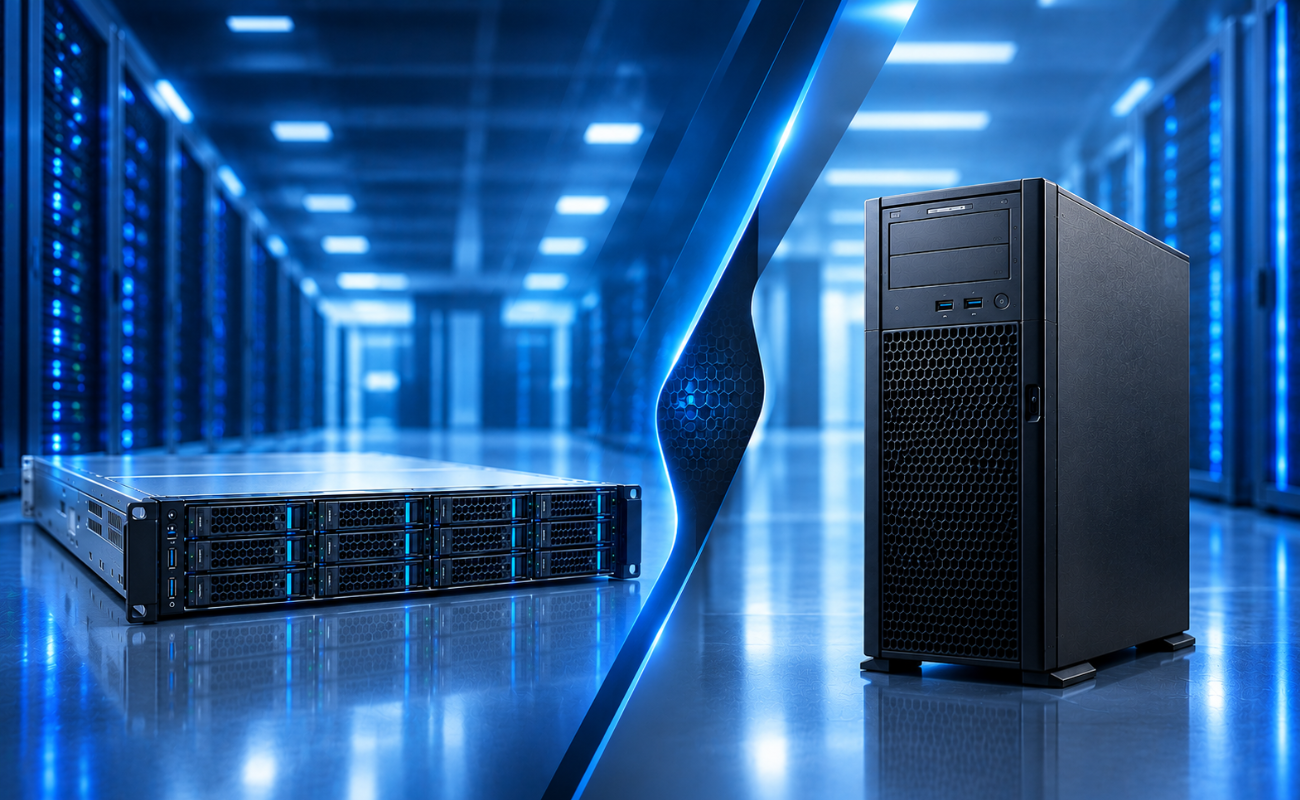
Rack Server vs Tower Server: 6 Key Differences Explained

Rack Server vs Tower Server: 6 Key Differences Explained
Choosing between a rack server and a tower server is an important decisi...
SSD vs HDD Storage: 8 Key Differences Every Business Should Know
SSD vs HDD Storage: 8 Key Differences Every Business Should Know
Choosing the right storage technology is essential for businesse...
Router Performance Explained: 7 Factors That Affect Your Internet Speed

Router performance plays a critical role in determining how efficiently a business network handles daily operations. From cloud-ba...
10 Router Security Features That Help Protect Business Networks
Business networks are constantly exposed to security risks, from unauthorized access and malicious traffic to compromised devices ...

Stateful Firewall vs Next-Generation Firewall: 8 Major Differences
Firewalls play a critical role in protecting business networks from unauthorized access, suspicious traffic, and cyber threats. Ho...

7 Firewall NGFW Types Compared for Business Network Security
Choosing the right NGFW firewall is an important part of protecting business networks fro...

11 Server Features Every IT Manager Should Look For
11 Server Features Every IT Manager Should Look For
Choosing the right server is an important decision for any organization. Serv...
Best RAM Options for Performance Workstations
Best RAM Options for Performance Workstations
Modern performance workstations are built for demanding workloads such as 3D render...

Dual-WAN vs Single-WAN Routers: 6 Key Differences Compared
Modern businesses rely heavily on stable Internet connectivity for cloud applications, communication, online platforms, remote acc...
Wi-Fi Router vs Wired Router: 8 Differences Every Business Should Know
Choosing the right networking equipment is an important decision for any business. As organizations become increasingly dependent ...
Storage Buying Guide: 7 Things to Consider Before You Choose
Storage Buying Guide: 7 Things to Consider Before You Choose
Modern businesses generate and manage large amounts of data every da...
