Choosing the right NGFW firewall is an important part of protecting business networks from unauthorized access, malware, suspicious traffic, and other cyber threats. However, not every firewall works in the same way.
Different firewall types inspect traffic at different network layers and provide different levels of visibility, control, performance, and security. Some focus on basic packet filtering, while modern solutions can identify applications, users, and advanced threats.
In this guide, we compare 7 firewall types and explain how each one works, its main advantages, limitations, and where it can fit into a business network.
1. Packet Filtering Firewall
A packet filtering firewall is one of the simplest types of firewall. It examines information in packet headers and makes decisions based on predefined rules.
These rules can include:
- Source IP address
- Destination IP address
- Port number
- Network protocol
- Traffic direction
If a packet matches an allowed rule, it can pass through. If it matches a blocked rule, it is denied.
Advantages
- Simple configuration
- Low processing requirements
- Fast traffic filtering
- Suitable for basic network access control
- Can be cost-effective
Limitations
Packet filtering generally focuses on packet-header information rather than the actual content of the traffic. This limits its ability to identify sophisticated application-level threats.
Common Business Use
Packet filtering can be useful for simple network segments, access-control rules, and environments where predictable traffic patterns are more important than advanced inspection.
2. Stateful Inspection Firewall
A stateful inspection firewall monitors the state of active network connections rather than evaluating every packet completely independently.
It keeps track of information such as:
- Source and destination IP addresses
- Ports
- Protocols
- Connection state
The firewall can then determine whether traffic belongs to an established and legitimate session.
Advantages
- Understands connection context
- More effective than basic packet filtering
- Provides stronger traffic control
- Suitable for many business networks
- Can handle established sessions efficiently
Limitations
A stateful firewall primarily operates around network and transport-layer information. It does not provide the same application awareness and advanced threat detection available in an NGFW.
Common Business Use
Stateful inspection remains a fundamental firewall technology and is commonly incorporated into modern security appliances.
3. Proxy Firewall
A proxy firewall, also called an application-level gateway, acts as an intermediary between internal users and external systems.
Instead of allowing a direct connection between the client and destination, the proxy receives the request, inspects it, and then establishes communication with the destination.
Advantages
- Application-layer inspection
- More detailed traffic control
- Can hide internal network addresses
- Can support content filtering
- Provides greater separation between internal and external systems
Limitations
The additional inspection can introduce processing overhead and latency. Proxy firewalls may also support a more limited range of applications compared with broader firewall platforms.
Common Business Use
Proxy-based security can be useful when a business needs detailed control over specific applications or web traffic.
4. Circuit-Level Gateway
A circuit-level gateway focuses on monitoring connections and sessions rather than deeply inspecting the content of every packet.
It evaluates whether a connection is legitimate and can establish controlled communication between networks.
Advantages
- Lower processing requirements than deep application inspection
- Can control connection establishment
- Helps hide internal network information
- Useful for specific session-based security requirements
Limitations
Because it does not deeply inspect application content, it may not detect threats hidden inside legitimate-looking application traffic.
Common Business Use
Circuit-level gateways can be useful as part of specific network architectures, although modern business security platforms often combine multiple inspection technologies instead of relying on this approach alone.
5. Web Application Firewall (WAF)
A Web Application Firewall (WAF) is designed specifically to protect web applications and APIs.
Unlike a general network firewall, a WAF focuses on HTTP and HTTPS requests and can inspect web application traffic for attacks such as:
- SQL injection
- Cross-site scripting (XSS)
- Malicious web requests
- Application-layer attacks
Cisco describes WAFs as specialized security controls that protect web applications, while NGFWs provide broader network traffic protection.
Advantages
- Specialized web application protection
- Inspects HTTP/HTTPS requests
- Helps protect public-facing websites
- Useful for APIs and online applications
- Can work alongside a network firewall
Limitations
A WAF is not designed to replace a general network firewall. Its primary focus is web application traffic.
Common Business Use
Businesses operating websites, e-commerce platforms, APIs, and other internet-facing applications may use a WAF alongside their broader network security infrastructure.
6. Unified Threat Management (UTM) Firewall
A Unified Threat Management (UTM) firewall combines multiple security functions into one platform.
Depending on the product, these functions can include:
- Stateful firewall
- Intrusion prevention
- Antivirus or malware protection
- Web filtering
- VPN
- Centralized management
Cisco notes that UTM solutions combine several security functions and often emphasize simplicity and ease of management.
Advantages
- Multiple security features in one platform
- Centralized management
- Easier deployment
- Reduced infrastructure complexity
- Suitable for many small and midsize organizations
Limitations
A UTM platform may not provide the same performance, scalability, or specialized capabilities required by every large enterprise environment.
Common Business Use
UTM can be useful for businesses that want multiple security functions without deploying many separate security appliances.
7. Next-Generation Firewall (NGFW)
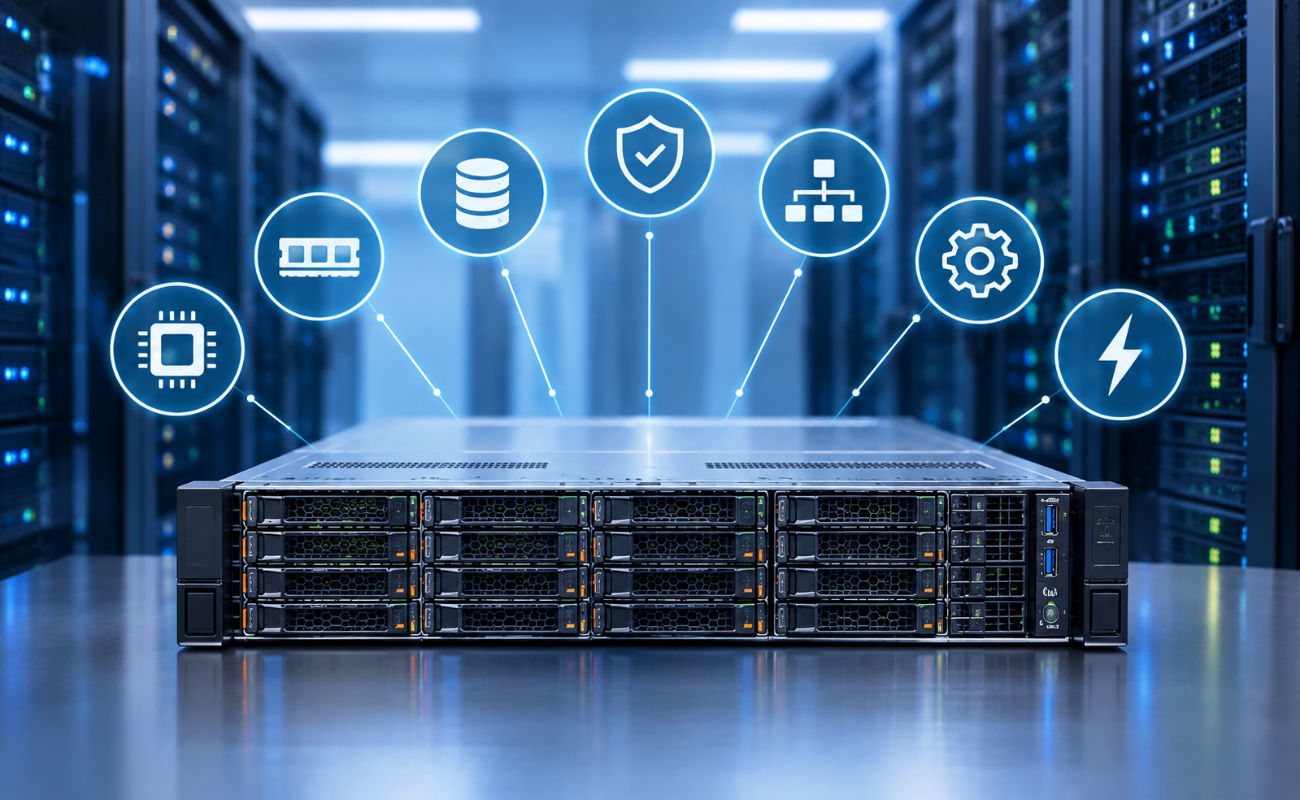
A Next-Generation Firewall (NGFW) combines traditional firewall capabilities with more advanced security technologies.
Modern NGFW platforms can include:
- Application awareness and control
- Intrusion prevention (IPS)
- Advanced malware protection
- User and identity awareness
- URL filtering
- Threat intelligence
- TLS/SSL inspection
- Deep packet inspection
Cisco describes NGFWs as an evolution of stateful firewall technology with additional application, identity, and threat-detection capabilities.
Advantages
- Advanced traffic inspection
- Application-level visibility
- Integrated intrusion prevention
- User-aware security policies
- Advanced threat detection
- Better visibility into network activity
Limitations
NGFWs can require more resources, configuration, licensing, and security expertise than simpler firewall technologies.
Common Business Use
NGFWs are commonly considered for organizations that need centralized, advanced protection across complex networks and internet-facing infrastructure.
7 Firewall Types Compared
| Firewall Type |
Main Inspection |
Main Purpose |
Typical Use |
| Packet Filtering |
Packet headers |
Basic traffic control |
Simple network rules |
| Stateful Inspection |
Connection state |
Session-aware filtering |
Business networks |
| Proxy Firewall |
Application layer |
Detailed application traffic control |
Web/application traffic |
| Circuit-Level Gateway |
Sessions/connections |
Connection control |
Specific network architectures |
| WAF |
Web application layer |
Web application protection |
Websites and APIs |
| UTM |
Multiple security functions |
Integrated protection |
SMB environments |
| NGFW |
Network + application layers |
Advanced network security |
Enterprise networks |
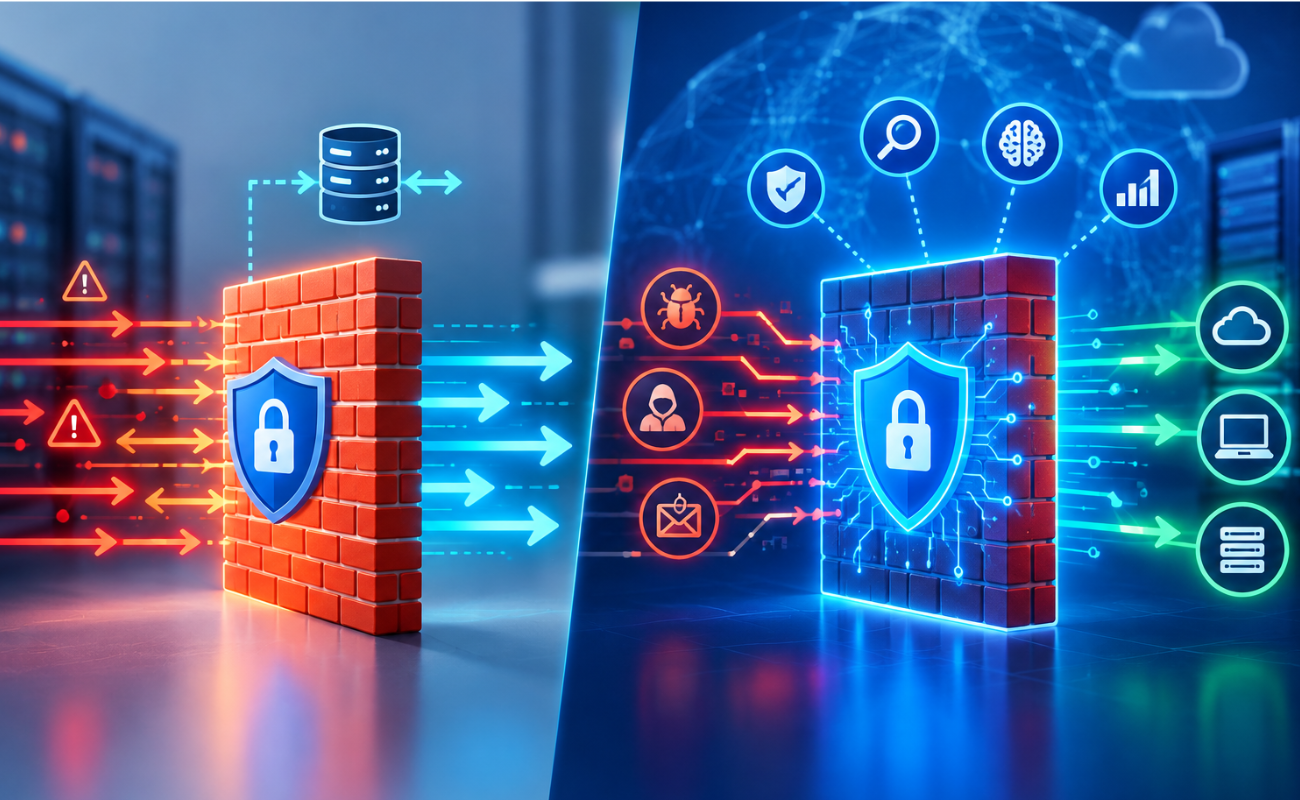
Traditional Firewall vs NGFW
One of the most important distinctions for businesses is between traditional stateful firewall technology and NGFW platforms.
A traditional stateful firewall generally makes decisions based on connection state, IP addresses, ports, and protocols.
An NGFW adds additional visibility and security capabilities, including application awareness, integrated IPS, user identity awareness, threat intelligence, and advanced inspection.
| Feature |
Traditional Stateful Firewall |
NGFW |
| IP Filtering |
✓ |
✓ |
| Port Filtering |
✓ |
✓ |
| Stateful Inspection |
✓ |
✓ |
| Application Awareness |
Limited |
✓ |
| Integrated IPS |
Limited/Additional |
✓ |
| User Identification |
Limited |
✓ |
| Threat Intelligence |
Limited |
✓ |
| Advanced Malware Protection |
Usually additional |
Available |
| Deep Inspection |
Limited |
✓ |
How to Choose the Right Firewall for Your Business
There is no single firewall architecture that fits every organization. The appropriate choice depends on the network’s size, applications, traffic volume, security requirements, and available IT resources.
1. Consider Your Network Size
A small office may have very different requirements from a large data center with hundreds of servers and multiple network segments.
2. Identify Your Applications
If your business depends heavily on web applications, APIs, cloud services, or specialized applications, application-level visibility may be important.
3. Check Traffic Volume
High-traffic environments need hardware and security platforms capable of processing traffic without creating unacceptable bottlenecks.
4. Review Security Features
Consider whether you need:
- IPS
- Malware protection
- URL filtering
- VPN
- Application control
- User-based policies
- SSL/TLS inspection
5. Consider Management
A firewall should be manageable by your IT team. Centralized monitoring and clear policy management can be important as the network grows.
6. Plan for Future Growth
Choosing equipment based only on today’s traffic can create limitations later. Consider expected growth in users, applications, bandwidth, and network infrastructure.
Firewall Brands for Business Networks
Businesses can find different firewall technologies across major enterprise networking and security vendors, including:
- Cisco
- Fortinet
- HPE Aruba Networking
- Dell
- Palo Alto Networks
- Sophos
The exact firewall capabilities depend on the specific product, model, software version, and licensing package.
For example, Cisco’s current NGFW guidance describes application control, IPS, advanced malware protection, identity awareness, and threat intelligence as important NGFW capabilities.
Why Firewall Selection Matters
A firewall is only one component of a broader security strategy. Businesses also need to consider network segmentation, endpoint security, authentication, monitoring, patch management, backups, and secure configuration.
Even a capable firewall can provide limited protection if its rules are poorly configured or if the organization relies on it as the only security control. Fortinet specifically notes the importance of continuous configuration management and avoiding overly broad policies.
Common Firewall Selection Mistakes
Businesses should avoid several common mistakes when choosing or deploying firewall infrastructure:
Choosing Based Only on Price
The cheapest appliance may not provide the required throughput or security capabilities.
Ignoring Future Growth
A firewall should be evaluated against expected bandwidth and user growth.
Buying Without Checking Features
Two appliances can have very different capabilities even if they have similar specifications.
Ignoring Licensing
Advanced features may require additional subscriptions or licenses.
Focusing Only on Perimeter Security
Internal network segmentation and east-west traffic can also require appropriate security controls.
Using Overly Broad Rules
Broad policies can create unnecessary access and make security management more difficult.
10 FAQs About Firewall Types
1. What are the main types of firewalls?
Common firewall types include packet filtering, stateful inspection, proxy firewalls, circuit-level gateways, WAFs, UTM firewalls, and next-generation firewalls.
2. What is the simplest type of firewall?
Packet filtering is one of the simplest firewall technologies because it primarily evaluates packet-header information such as IP addresses, ports, and protocols.
3. What is a stateful firewall?
A stateful firewall tracks active connections and uses connection state when deciding whether traffic should be allowed or blocked.
4. What is a proxy firewall?
A proxy firewall acts as an intermediary between a client and destination, allowing it to inspect and control traffic at the application level.
5. What is a WAF?
A Web Application Firewall protects web applications and APIs by inspecting web requests and identifying malicious application-layer traffic.
6. Is a WAF the same as an NGFW?
No. A WAF focuses primarily on web application traffic, while an NGFW provides broader network protection with features such as application control, IPS, and threat intelligence.
7. What does UTM mean?
UTM stands for Unified Threat Management. It combines several security functions into a single platform.
8. What is an NGFW?
An NGFW is a Next-Generation Firewall that combines traditional firewall functions with advanced capabilities such as application awareness, IPS, identity awareness, and threat detection.
9. Can a business use more than one firewall technology?
Yes. Different security technologies can be deployed together. For example, an organization may use an NGFW for broad network protection and a WAF to protect public-facing web applications.
10. How do I choose the right firewall?
Evaluate your network size, bandwidth, applications, security requirements, scalability, management needs, and available budget before selecting a firewall platform.
Conclusion
Understanding the different firewall types makes it easier to evaluate business network security requirements. Packet filtering and stateful inspection provide fundamental traffic control, while proxy firewalls and WAFs offer more specialized application-level protection. UTM platforms combine multiple security functions, and NGFWs extend traditional firewall capabilities with advanced application and threat protection.
The right solution depends on your organization’s network architecture, traffic requirements, applications, security policies, and future growth.